Iran Special Report: Prelude to War?
US-Iran Military Escalation, Domestic Crisis, and Regional Implications
Report Details
Initial Publish Date
Last Updated: 21 FEB, 2026
Report Focus Location: Iran
Authors: DF, NB, NA
Contributors: GSAT
GSAT Lead: MF
RileySENTINEL provides timely intelligence and in-depth analysis for complex environments. Our global team blends international reach with local expertise, offering unique insights to navigate challenging operations. For custom insights or urgent consultations, contact us here.
Executive Summary
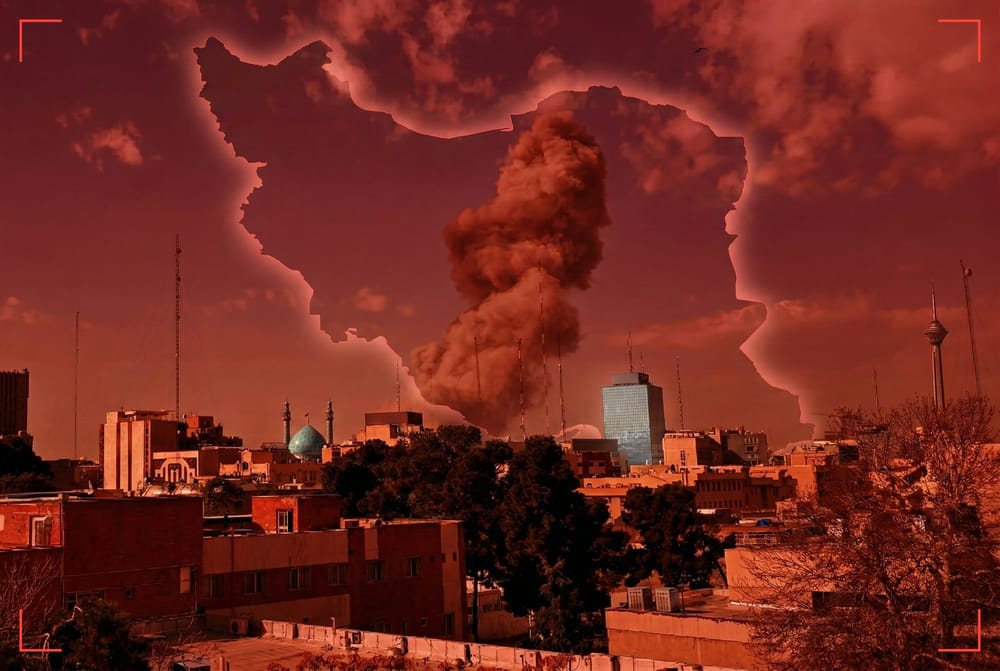
The United States and Iran are at the highest risk of military confrontation since Operation Midnight Hammer struck three Iranian nuclear facilities on June 21, 2025. On February 19, President Trump told the inaugural Board of Peace summit that the world would find out "over the next probably 10 days" whether the US would reach a deal with Iran or "take it a step further." Hours later, aboard Air Force One, he extended the window to "10, 15 days, pretty much maximum."
On February 20, Trump explicitly confirmed he is "considering" limited strikes against Iran, the first on-the-record presidential acknowledgment. The Wall Street Journal reported that Trump is evaluating limited initial strikes targeting select military or government facilities to pressure Iran back to the table, with potential escalation if Iran continues enrichment. No strikes occurred during the February 20-21 weekend window.
The second round of indirect US-Iran nuclear talks concluded on February 17-18 in Cologny near Geneva, mediated by Oman. Iran's Foreign Minister Abbas Araghchi said both sides reached an understanding on "guiding principles" but that this "does not mean we will reach an agreement soon." The Trump administration demands zero enrichment, missile restrictions, and cessation of proxy support. Iran has rejected all three.
However, on February 21, the semi-official Iranian Students' News Agency (ISNA) reported that US officials have accepted Iran's position on continuing uranium enrichment, dropping the demand for a complete halt during the Geneva round. An unnamed Iranian diplomat told ISNA that negotiations have shifted to technical parameters: enrichment levels, centrifuge numbers, and facility locations. Separately, a senior US official told Axios that the Trump administration may consider "limited symbolic enrichment" if Iran can demonstrate it provides no pathway to weapons capability. These signals, if accurate, represent the first narrowing of the negotiating gap since talks resumed. Araghchi stated on February 20-21 that a draft agreement could be ready within "two or three days" and that both sides are seeking a "fast deal."
The Defense Department is sending additional warships, air defenses, and submarines to the Middle East. Two carrier strike groups, over 50 fighter jets deployed within a single 24-hour window, and over 150 military cargo flights have positioned the US for sustained operations. An Axios report citing a Trump administration advisor put the probability of kinetic action at 90% and described a potential "weeks-long campaign."
Inside Iran, the convergence of internal and external crises has produced the most volatile environment since the 1979 revolution. The AP reported on February 12 that HRANA has verified at least 7,003 deaths and over 52,941 arrests from the January crackdown. On February 20, the first day of Ramadan, the Institute for the Study of War documented 20 anti-regime protests across eight provinces. President Pezeshkian delivered a defiant televised address on February 21 declaring Iran will not "bend its head" under pressure.
Risk Level: CRITICAL | Defer all non-essential travel to Iran, Iraq, and the Gulf littoral states. Organizations with permanent presence in Iran should ensure evacuation and/or relocation planning and procedures are reviewed. Establish enhanced check-in protocols recommended.
Remaining content is for members only.
Please become a free member to unlock this article and more content.
Subscribe NowAuthors

Nathan Ackerman is Managing Director of Riley Risk, specializing in complex geopolitical threats. A published author in The Guardian, Devex, and IPSB with military and intelligence expertise, he founded RileySENTINEL for actionable security insights.

GSAT (Geopolitical and Security Analysis Team) is Riley Sentinel's collective byline for team contributions or analysts requiring profile management due to sensitive work. All contributors are vetted by Riley Risk senior staff.

Nolan Byrd, Regional Security Analyst at Riley Risk, provides security analysis, and reporting for the RileySENTINEL platform, delivering insights for complex environments.