Report Details
Initial Publish Date
Last Updated: 11 MAR 2026
Report Focus Location: Americas - Venezuela
Authors: CC, AB, BK
GSAT Lead: MF, NA
RileySENTINEL provides timely intelligence and in-depth analysis for complex environments. Our global team blends international reach with local expertise, offering unique insights to navigate challenging operations. For custom insights or urgent consultations, contact us here.
Executive Summary
The reemergence of U.S. interventionism in the Western Hemisphere under President Donald Trump marks a decisive shift in American foreign policy toward Latin America and the Caribbean. Drawing explicitly on the legacy of the 1823 Monroe Doctrine and Theodore Roosevelt's 1904 Corollary, the second Trump administration has elevated hemispheric dominance, migration control, and the exclusion of rival great powers as central pillars of U.S. national strategy. The 2025 National Security Strategy designated Latin America as the highest regional priority, signaling the most assertive U.S. posture toward the region since the Cold War.
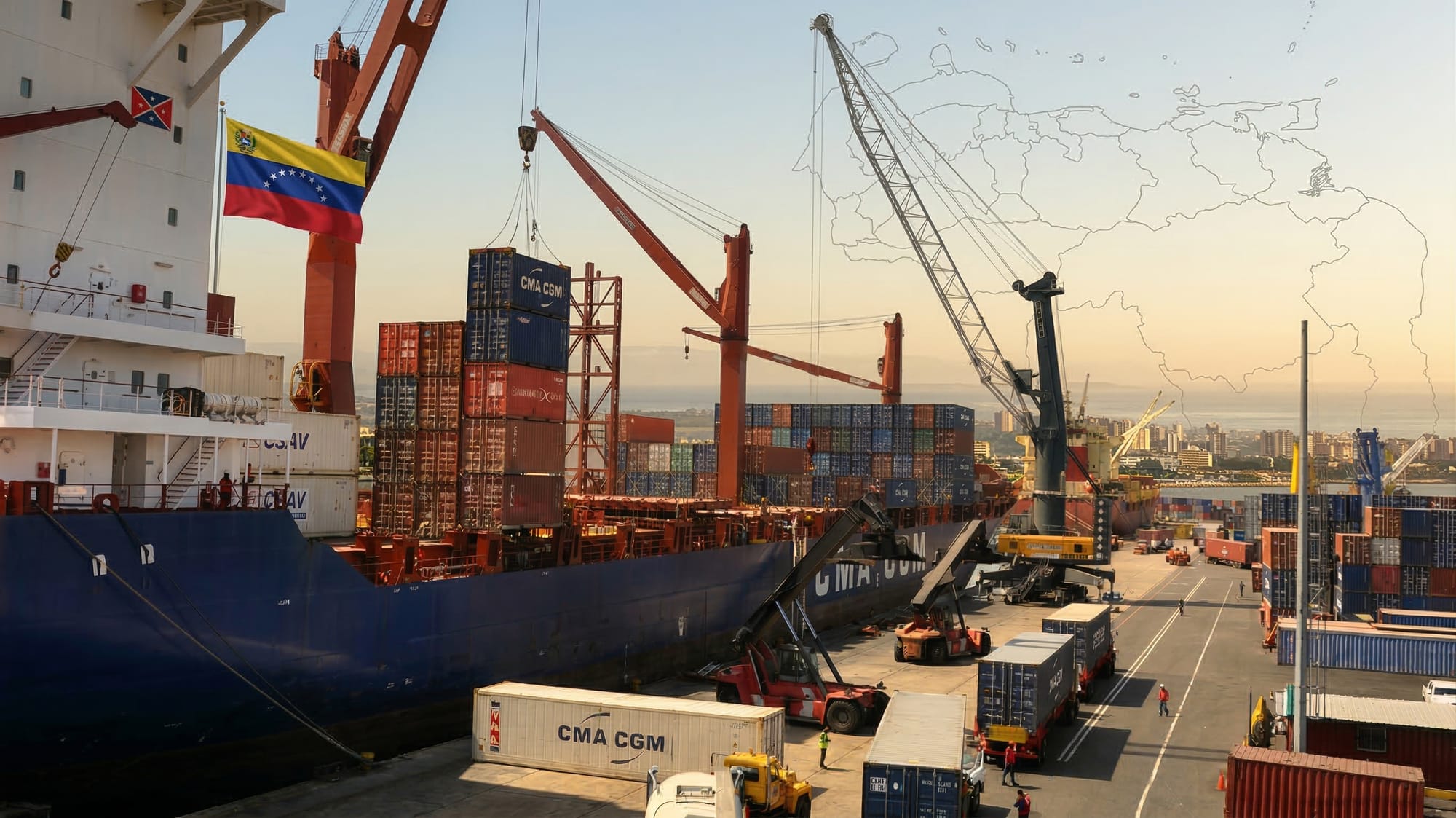
Venezuela served as the primary catalyst. A sustained pressure campaign, including expanded sanctions, an oil embargo, covert operations, and a naval blockade, culminated in January 2026 with the U.S.-led operation that removed President Nicolás Maduro from power. Trump explicitly framed the intervention as an application of the "Donroe Doctrine," warning that American dominance in the hemisphere would no longer be contested. Yet Maduro's removal has not produced stability. Much of the former regime's political, military, and criminal architecture remains intact, creating conditions for civil unrest, governance paralysis, and prolonged uncertainty.
Cuba and Nicaragua now occupy the center of this strategic recalibration. Cuba's proximity to U.S. territory and its control over critical maritime chokepoints make it a strategic linchpin. Nicaragua forms part of the same logistical arc linking the Caribbean to the Pacific and has leveraged its transit position to exert political pressure through migration flows. Both countries are economically fragile and heavily exposed to external pressure. Both face compounding crises. And both sit directly in Washington's crosshairs.
Three scenarios dominate the 12 to 24 month outlook: gradual escalation without regime collapse, negotiated de-escalation through selective sanctions relief, and a low-probability but high-impact acute crisis involving humanitarian spillover and great-power confrontation. The most likely outcomes point toward sustained instability rather than rapid transformation. For organizations operating in the region, the environment will remain defined by elevated political risk, sanctions exposure, security volatility, and regulatory uncertainty.
This is the condensed intelligence brief. The full SpecialREPORT (8,000+ words) includes detailed analysis of sanctions regimes, economic vulnerability assessments, operational risk matrices for Venezuela, Cuba, and Nicaragua, scenario probability modeling, and regulatory compliance exposure by country.
[Download the full report at the end of this report]
Remaining content is for members only.
Please become a free member to unlock this article and more content.
Subscribe NowAuthors

Nathan Ackerman is Managing Director of Riley Risk, specializing in complex geopolitical threats. A published author in The Guardian, Devex, and IPSB with military and intelligence expertise, he founded RileySENTINEL for actionable security insights.

GSAT (Geopolitical and Security Analysis Team) is Riley Sentinel's collective byline for team contributions or analysts requiring profile management due to sensitive work. All contributors are vetted by Riley Risk senior staff.

Claudio Costa, Regional Security Analyst at Riley Risk, provides security analysis, and reporting for the RileySENTINEL platform, delivering insights for complex environments.

Dr. Marko Filijovic is a Special Advisor for Riley Risk with expertise in geopolitical risk, security intelligence, artic defense and threat analysis. He holds a PhD in Security Studies from the University Of Beograd.