```

Rebuilding Syria SpecialREPORT

Sectoral Recovery and Infrastructure Prospects | JUL 2025

Rebuilding Syria SpecialREPORT
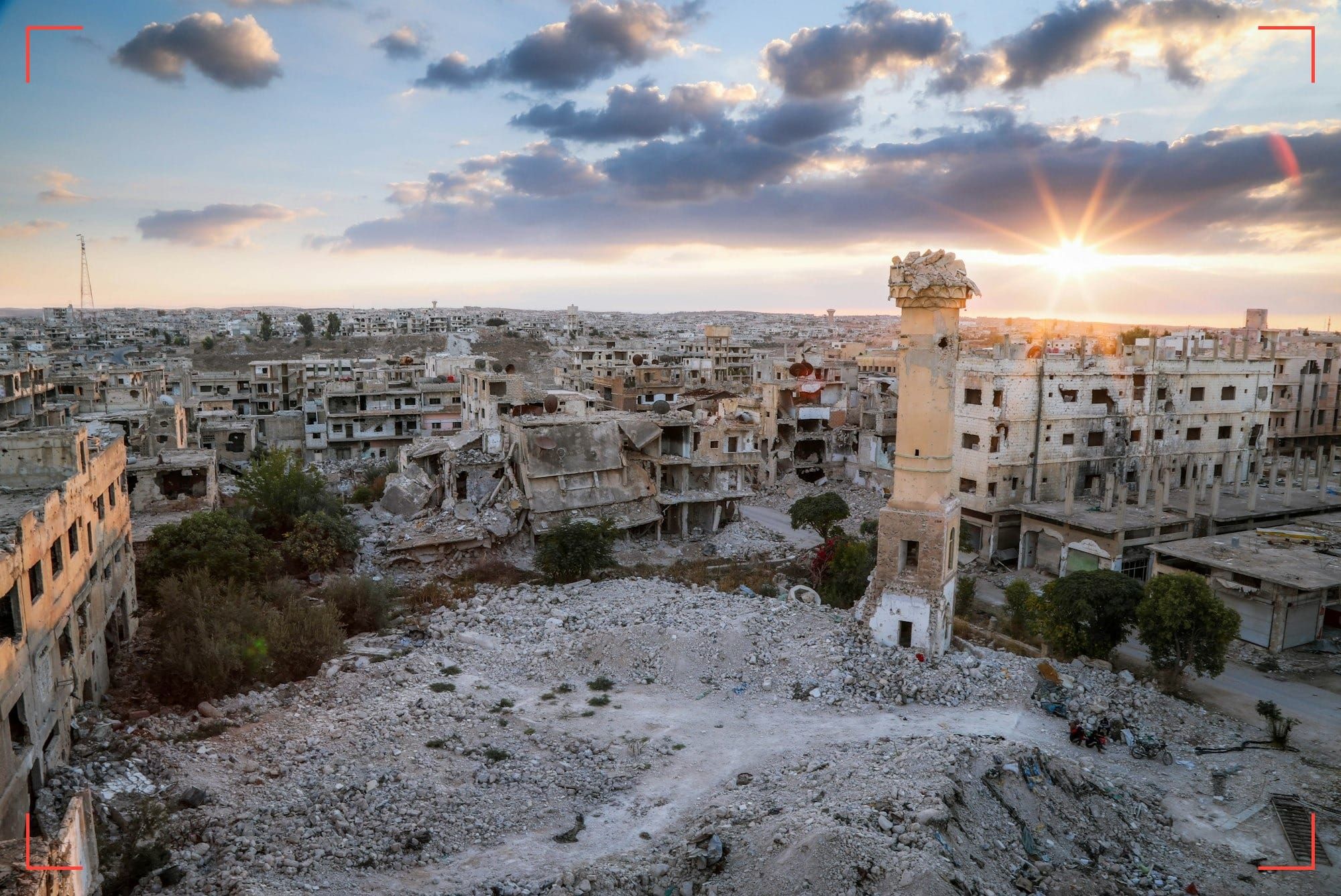
Photo by Mahmoud Sulaiman / Unsplash
Table of Content

Report Details

Initial Publish Date 
Last Updated: 16 JUL 2025
Report Focus Location: MENA
Authors: AA, SO
Contributors: GSAT
GSAT Lead: MF

RileySENTINEL provides timely intelligence and in-depth analysis for complex environments. Our global team blends international reach with local expertise, offering unique insights to navigate challenging operations. For custom insights or urgent consultations, contact us here

Key Findings

  • Syria’s GDP is estimated at around $29 billion, while the cost of full reconstruction is estimated between $250 billion and $500 billion.
  • The Syrian government is offering incentives like cash-for-work programmes to encourage employment opportunities and the reconstruction of infrastructure at a quicker pace. 
  • Gulf state investors have expressed interest in rebuilding Syria’s telecommunications sector, which will cost between $200-$300 billion. 
  • It is estimated that the rehabilitation of housing and related infrastructure, such as water, will take up about 60% of the estimated reconstruction bill.
  • Major infrastructure rehabilitation is required for oil fields and pipelines, which are mainly located in the country’s east. Exporting oil via the Mediterranean will require further pipeline construction.
  • Syria is suffering from a massive housing deficit owing to intense urban fighting and the gradual return of refugees. 
  • The UN has identified a $500 million gap in funding required for the agricultural sector to become operational and sustainable once more. 
  • The World Bank has offered $146 million to invest in the rehabilitation of Syria’s electrical power grid. Türkiye and Qatar have also proposed investments in this sector. 
  • Syria’s tourism industry is starting to make a minor comeback at certain sites in the country’s south, such as Bosra al-Sham in Daraa province. 
  • Iraq’s restoration of cross-country transit networks in the form of the Development Road can be an essential model for Syria to rebuild its transit network and become a regional hub.

Summary

Following the overthrow of Bashar al-Assad in December 2024, Syria has entered a critical phase of post-conflict recovery. The establishment of a transitional government, the lifting of international sanctions, and renewed foreign interest have opened a window of opportunity for reconstruction across key sectors. Years of war have devastated Syria’s infrastructure, economy, and human capital—halving GDP, crippling transit networks, and displacing millions. Now, new investment contracts in construction, energy, telecommunications, and transportation signal the start of large-scale rehabilitation efforts. 

Cash-for-work initiatives and international funding, including World Bank support, are helping rebuild while addressing unemployment and skills gaps. However, challenges remain: extensive damage, funding shortfalls, and ongoing instability pose significant risks to long-term recovery. Drawing inspiration from Iraq’s Development Road and growing regional connectivity via the Belt and Road Initiative, Syria aims to reclaim its role as a regional transit hub. While high-risk, the Syrian market offers high-reward potential for early investors—especially from neighboring states—provided they align with local capabilities and remain mindful of persistent security and governance issues. The report outlines these emerging opportunities, sector-specific needs, and the strategic importance of international engagement in Syria’s reconstruction.

Current Events/Major Issue

The overthrow of Bashar al-Assad in December 2024 and the subsequent establishment of a transitional government have attracted regional and international investors who all desire to contribute to Syria’s post-conflict recovery. This rapid influx of investment marks a stark contrast to the years of economic decline and isolation that dominated Syria once the civil war  began in 2011. 

The lifting of US and EU sanctions, combined with the announcement of new investment and infrastructure projects, brings fresh prospects to a country that has had its infrastructure, transit networks, natural resources, and public services devastated by 14 years of conflict. New investment contracts in sectors such as transport and energy, with both regional and international partners, are aimed at sparking economic growth and creating jobs that will address Syria's need for human capital and skilled labor. 

As a result of the conflict, Syrian students and workers have experienced significant disruptions in education and vocational training. Unemployment in Syria rose from 8.6% to 13.5% from 2011 to 2023, while youth unemployment rose from 21.3% to 33.5%. To address these challenges, new initiatives like cash-for-work programmes have been introduced to provide immediate employment opportunities while simultaneously rebuilding essential infrastructure. They also offer on-the-job training, helping to bridge the skills gap and get laborers on the worksite at a faster pace. 

Background

As mentioned in our previous report about this matter, Syria has undergone an immense transformation since the outbreak of the war in 2011. By 2020, Syria’s pre-war GDP of about $60 billion had halved alongside living standards, and massive depreciation of both urban and rural infrastructure. The decline of top Syrian exports, oil and tourism, has resulted in export revenues from $18.4 billion in 2010 to $1.8 billion in 2021, according to the World Bank.

Agriculture is another economic sector that suffered immense losses, now accounting for just 16% of Syria's workforce. Fewer farmers, damaged irrigation systems, and reduced access to required farming equipment all contributed to agricultural production declining to just 1 million of the pre-conflict level of 4 million tonnes per year. 

Analysis and Future Outlook 

Sectors of Opportunity

Before the eruption of the conflict, Syria boasted a GDP of $60 billion, representing a steady rise since the 2000s. Most of the economy was services-oriented, with a focus on tourism, by 50%. Industries, particularly extractive industries such as hydrocarbons, made up another 30%, followed by Agriculture at 19%.

Figure 1: Gross domestic product (GDP) in current prices in Syria from 1980 to 2010 (billion U.S. dollars)

Source: Statista

The war had an immense and detrimental impact across all sectors, with the oil, manufacturing, and tourism sectors suffering particularly heavily. While some sectors, such as agriculture, saw an increase in their share of GDP, this is likely due to the decline of other industries rather than an indicator of net growth. Presently, the GDP is estimated at around $29 billion, while the cost of full reconstruction is estimated between $250 billion and $500 billion. Less optimistic estimates put the bill at $1 trillion. With extensive damage across the country, nearly every economic sector will require rehabilitation.

Construction

Construction – taking up about 3% of Syria’s pre-war industry – will very likely emerge as the largest component of reconstruction costs. The country is suffering from a massive housing deficit owing to intense urban fighting and the gradual return of refugees. It is estimated that the rehabilitation of housing and related infrastructure, such as water, will take up about 60% of the estimated reconstruction bill. Much of this will cover major metropolitan areas such as Damascus and Aleppo. As early entrants, Turkish firms recognized for their “financial muscle, experience, and technology” already stand to secure major investment contracts.

However, given the scale of reconstruction, other investors may still find many opportunities in the construction sector. Indeed, during meetings between Jordanian and Syrian officials, the Jordanian Chamber of Commerce expressed strong interest towards involvement in the construction sector.

Telecoms and Communication

The telecoms and communication sectors – a relatively small but rapidly growing sector before the war, with a GDP share of about 3% – are also likely to grow rapidly. Although Syria adopted the internet relatively late, and has typically low penetration, the effects of the conflict forced many Syrians to become digitally literate and active, with high expertise on gaining online access under suboptimal conditions. As the country moves to connect the domestic population with the international diaspora, the demand for improved telecommunications will likely grow.

It is expected that rehabilitation and modernization of the telecoms infrastructure will require around $200 billion. Another $300 billion is expected for fibre optics expansion. Presently, Gulf investors dominate this sector and are the main actors who have expressed interest in investing in this sector. However, as is the case with construction, the sheer scale of the challenges will likely offer opportunities for late joiners.

Electricity and Power

The electricity and power sector is another sector that has received immense attention. Years of conflict, including the deliberate targeting of pylons, left the country highly under-capacity, at about 1,500MW, providing only about 2-4 hours of electricity per day. Blackouts are common, and the grid is highly unreliable. Presently, the joint Turkish and Qatari investments aim to reach a capacity of 5,000MW. The World Bank has also offered $146 million to invest in the rehabilitation of the power grid.

The restoration and rehabilitation of the energy grid is essential, as the viability of many other sectors, especially communication, will hinge on a stable energy supply. While the existing investments are significant, it is likely that many of the more distant parts of the country will continue to grapple with an unsteady power supply, necessitating local solutions such as solar panels.

Transportation Infrastructure

Syria has long served as a logistical and transit hub for its neighbours. The M4 and M5 highways cross the country horizontally and vertically, connecting Iraq to Lebanon, and Jordan to Türkiye. Restored access and trade along these highways were among the main, recurring topics for peace talks during the conflict. Intense conflict, however, has resulted in immense damage to these highways as well as many road networks around the country. It is estimated that road infrastructure is severely damaged across the country, and the rail system is in need of a complete overhaul. Turkish and Syrian officials have cited Syria’s goal of becoming a “regional transportation link” as essential to its recovery, with Türkiye pledging to support Syria towards these goals. Syrian officials also expressed interest in the local production of buses and other transit means. A Free Trade Zone in Saraqib, at the crossing of the M4 and M5 highways, was also proposed.

Despite aspirational pledges, no major move has been made towards rehabilitating Syria’s transport infrastructure. With countries such as Iraq already working on their cross-country transit networks in the form of the Development Road, restoration of such services will be essential for Syria to achieve its goals of becoming a regional hub.

Other Sectors

Among other sectors in need of investments are hydrocarbons, agriculture, and tourism.

The hydrocarbons sector, while never as prominent as those of major producers like Iraq and Saudi Arabia, was nevertheless a significant mainstay of the Syrian economy, contributing some 380,000 to 400,000 barrels per day before the war. The current output is far lower, at 80,000 BPD. With the cessation of sanctions, analysts hope that the capacity can return to its pre-war levels, and even go up to 400,000 to 500,000 barrels per day. Optimistic estimates put potential revenues at $10 - $15 billion annually at $70BPD. However, major infrastructure rehabilitation is required for fields and pipelines, and exporting oil via the Mediterranean will require further pipeline construction.

Syria’s agricultural sector is another area where the country presents opportunities. As one of the main contributors to GDP and employment, agriculture is likely a priority for Damascus, looking to ensure stability in the countryside. However, it is estimated that the sector needs some $10 to $17 billion for reconstruction, with the UN identifying a $500 million funding gap for immediate needs. Irrigation modernization and drought-resistant technology will be essential, as the sector has been hit severely by successive droughts.

Tourism is another sector that offers opportunities. Making up 12% - 14% of the GDP at a value of $6.3 billion in 2010, the sector was a mainstay for the economy before the war. The sector collapsed almost completely following the outbreak of the war. Recovery was further damaged by the COVID-19 pandemic, resulting in weak growth even as the country stabilised.

While the recovery of the tourism sector may seem unthinkable as the country continues to grapple with instability and security, several tourist sites, such as Bosra al-Sham in southern Syria, have already shown signs of recovery, with the arrival of Western tourists. Such tourism, although sparse, offers opportunities for quick cash injections into local economies.

Stability Factors

- Degrading Factors 

  • Syria is suffering from a massive housing deficit owing to intense urban fighting and the gradual return of refugees. 
  • The rehabilitation and modernization of Syria’s telecoms infrastructure will require around $200 billion, with another $300 billion required for fibre optics expansion.
  • Despite discussions and aspirational pledges, no major move has been made towards the necessary reconstruction of Syria’s transport infrastructure. 
  • For the hydrocarbon industry, major infrastructure rehabilitation is required for fields and pipelines. Exporting oil via the Mediterranean will require further pipeline construction.
  • The UN has identified a $500 million gap in funding required for the agricultural sector to become operational and sustainable once more.

- Stabilization Factors 

  • The conflict has made many Syrians digitally literate, active, and proficient in gaining online access under suboptimal conditions. These skills will be of great assistance as the country moves to rebuild its telecommunications sector. 
  • The tourism industry is already beginning to make a return, particularly in southern Syria.
  • The Syrian government is offering incentives, such as cash-for-work programs, to facilitate employment opportunities and accelerate the reconstruction of infrastructure. These programs provide an opportunity for quick local employment. 
  • The World Bank has offered $146 million to invest in the rehabilitation of Syria’s electrical power grid. 
  • Foreign investors, including Türkiye, Jordan, Saudi Arabia, Qatar, and the UAE, have all pledged to support Syria’s reconstruction.
  • Iraq’s Developmental Road could provide the framework to rebuild cross-country supply routes in Syria.

Impact and Recommendations

  • Investment opportunities are likely to be found in foreign investors who have pledged to support Syria’s reconstruction. These include but are not limited to Türkiye, Jordan, Saudi Arabia, Qatar, and the UAE. 
  • The different incentives provided by Syria’s government are expected to facilitate an easy and quick way for local Syrians to gain employment and rebuild the infrastructure and public services in their area. 
  • Not all sectors offer equal opportunities: Syria’s immediate neighbours will likely find their geographic location much more conducive to the logistical and practical needs of certain sectors, such as construction or hydrocarbons, than those with no local connections. Investors are advised to identify not only their own needs, but the local capacities available as well. 
  • The comeback of the tourism industry in Syria could provide quick economic opportunities for local areas. While tourism in Syria is being introduced in the “safer” areas, like Bosra al-Sham in Daraa province, the area still experiences regular outbursts of violence. 
  • Many investments in post-war Syria are likely to be high-risk, high-reward. While there are immense opportunities in growth sectors such as construction, telecoms, transportation, energy, or hydrocarbons, their viability is dependent on Syria’s long-term stability, and will likely come with significant financial and security risks that investors will need to be aware of. 
  • The construction of the Development Road in Iraq presents an innovative framework that Syria could adopt to begin reconstructing its cross-country transit network. Moreover, Iraq’s expanding trade ties with China—particularly through the Belt and Road Initiative—offer potential economic dividends for Syria.
  • The reconstruction of Syria’s telecommunications network could be assisted by the fact that many Syrians have become technologically literate, even while living through sub-optimal conditions. Improvement in Syria’s telecommunications network can help connect Syria with its international diaspora.

RileySENTINEL 

Our RileySENTINEL platform delivers comprehensive global, regional, and country-specific situation reporting and analysis. Powered by the Riley Risk team, our Geopolitical & Security Analysis experts provide:

  • Timely, on-the-ground intelligence
  • In-depth analysis of high-risk environments and events
  • Proactive insights to navigate volatile operational contexts

Our globally distributed advisors and analysts combine global reach with regional expertise and local insights, empowering clients with unique perspectives to make informed decisions in challenging environments.

Enhance Your Risk Management Strategy
For deeper insights or enhanced custom reporting tailored to your specific needs, we offer on-demand consultations. An expedited response option is typically available, based on our team and advisor availability. 

To explore how our risk advisory services can strengthen your business operations and help you achieve more, schedule a call with the RileySENTINEL team using the service booking link below.


Expert Analysis On-Demand: Request Support

Leverage RileySENTINEL's expert team for deeper analysis and tailored insights:

  • On-demand consultations with our global network of advisors
  • Custom reports focused on your specific operational contexts
  • Proactive risk mitigation strategies for volatile environments
  • In-depth analysis of regional stability factors and future outlooks
  • Expedited response options for time-sensitive inquiries

Click this link to be redirected to the support request page. 


RileySENTINEL: Global Insights. Local Expertise.

Subscribe to join the discussion.

Please create a free account to become a member and join the discussion.

Already have an account? Sign in

Sign up for RileySENTINEL newsletters.

Stay up to date with curated collection of our top stories.

Please check your inbox and confirm. Something went wrong. Please try again.