SpecialREPORT: Belarus Under Russian Strategic Control
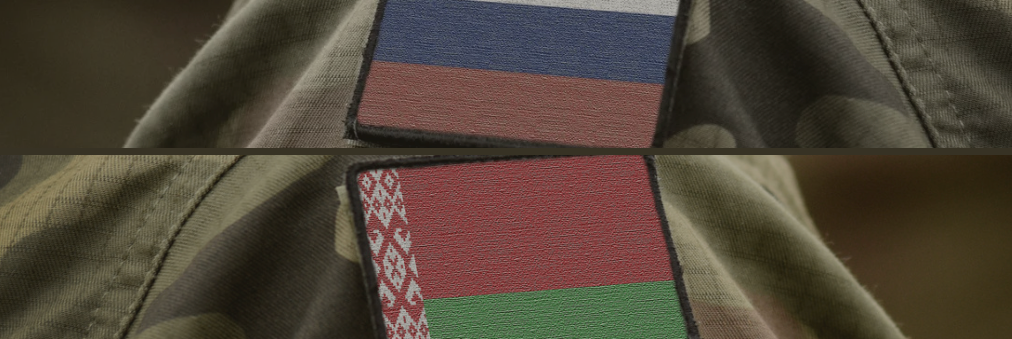
How Moscow turned Minsk into an operational extension of its war without formal annexation, and what that means for NATO’s eastern flank
Report Details
Initial Publish Date
Last Updated: 21 October 2026
Report Focus Location: Russia, Belarus
Authors: LO, LH, AR
GSAT Lead: SZ
RileySENTINEL provides timely intelligence and in-depth analysis for complex environments. Our global team blends international reach with local expertise, offering unique insights to navigate challenging operations. For custom insights or urgent consultations, contact us here.
Executive Summary
Belarus has become an integral part of Russia's war effort in Ukraine. It provided the launch pad for Russian troops along the shared border in February 2022, allowed the stationing of Russian tactical nuclear weapons on its territory, and supplies material and infrastructure support to the Russian military. Under the Union State framework, Western sanctions have pushed Minsk into deeper industrial and trade integration with Moscow, and that dependence now runs through Belarusian military and foreign policy.
Belarus kept some distance from Moscow between the 2014 annexation of Crimea and the 2022 full-scale invasion, but the crisis surrounding the 2020 presidential election appears to have marked a point of no return. As Lukashenko continues to cede sovereignty and autonomy, formal annexation may be neither necessary nor the most advantageous option for the Kremlin. Riley Risk assesses with moderate confidence that de facto annexation through political pressure and economic dependency is highly likely to remain Moscow's preferred course.
This is the condensed intelligence brief. The full SpecialREPORT includes the treaty and doctrine changes that place Belarusian forces under a Russian-led command; airfield, rail, and nuclear basing detail; how Belarusian territory and telecom networks guide Russian drone strikes; Belarusian chassis, optics, and microchip inputs to Russian missile and air-defense programs; Belarus's political trajectory from the post-Crimea balancing act through the 2020 crackdown and the 2025 election; trade, external debt, and energy ownership data; the diverging EU and US sanctions tracks; and three scenarios to 2030 with indicators to monitor.
[Download the full report at the end of this report]
Remaining content is for paid members only.
Please subscribe to any paid plan to unlock this article and more content.
Subscribe NowAuthors

Sofia Zanin, Regional Security & Geopolitical Analyst Lead for Riley Risk, provides security analysis, and reporting for clients and the RileySENTINEL platform, delivering insights for complex environments.

Luke Hurrel, Regional Security Analyst at Riley Risk, provides security analysis, and reporting for the RileySENTINEL platform, delivering insights for complex environments.

Luke Okropirashvili, Regional Security Analyst at Riley Risk, provides security analysis, and reporting for the RileySENTINEL platform, delivering insights for complex environments.

Abel Juan Agut Rabadán, Regional Security Analyst at Riley Risk, provides security analysis, and reporting for the RileySENTINEL platform, delivering insights for complex environments.