Report Details
Initial Publish Date
Last Updated: 03 DEC 2024
Report Focus Location: Syria
Authors: MA
Contributors: GSAT, DA
GSAT Lead: MF
RileySENTINEL provides timely intelligence and in-depth analysis for complex environments. Our global team blends international reach with local expertise, offering unique insights to navigate challenging operations. For custom insights or urgent consultations, contact us here.
NOTICE
This FLASH report provides initial analysis of a critical incident and its immediate implications. Given evolving conditions and potential misinformation, stakeholders should use this preliminary update to assess operational modifications needed based on current and anticipated risk exposure.
ACTION ITEMS
Monitor situation developments and coordinate with Riley Risk advisory leads for detailed analysis and guidance. Review current security posture and implement necessary operational changes. While this report enables rapid response planning, it is not a substitute for comprehensive analysis.
SITUATION SUMMARY
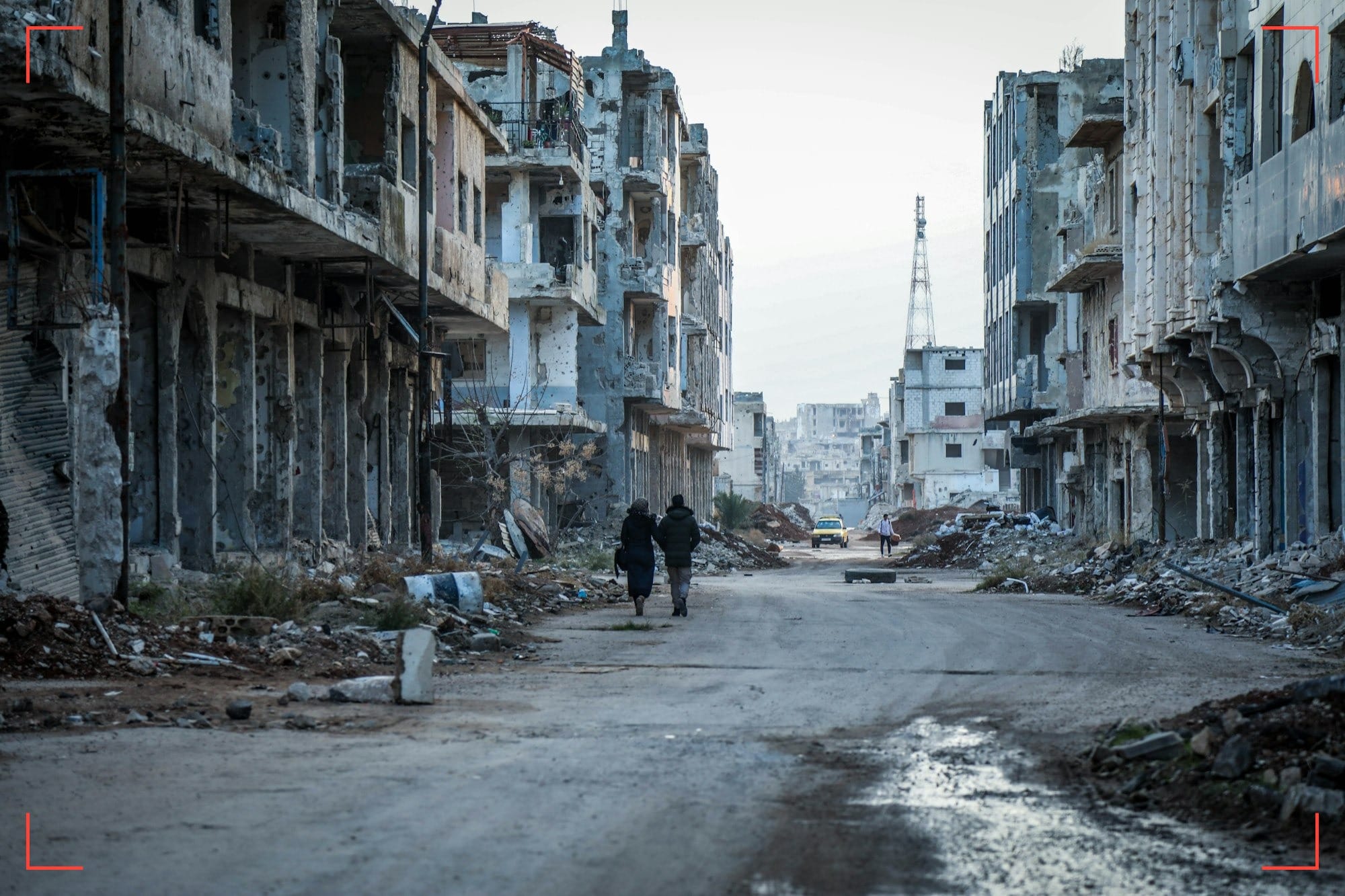
In a surprising turn of events, the civil war in Syria has reignited after many years of gridlock. On Wednesday, November 27, Syrian rebels led by the jihadist group Hayat Tahrir al-Sham (HTS) took control of a military base and 15 villages in north-western Aleppo. This move surprised many observers as the rebels left their stronghold in the north-western Idlib province for the first time in many years. It also represents the first attack on Aleppo since 2016, when government forces with the help of a Russian air campaign succeeded in retaking the second-largest city of Syria. The rebels appeared to be very well prepared for the offensive and made swift progress in moving towards the city from Wednesday on. They cut off the main highway to Damascus on Thursday, November 28, and arrived at the outskirts of Aleppo on Friday, November 29, night. On Sunday, December 1, they had already taken complete control of the second-largest city in Syria. Some factions of the rebels started to push south towards the city of Hama on Sunday, with more fighters likely to follow them over the coming days to back up the push and consolidate their gains so far. Several towns in the countryside close to Hama, the fourth-largest city, seem to have already been taken by the rebels.
The Syrian army was being swept in the first few days of the offensive and reportedly lost dozens of soldiers in Aleppo, according to the defense ministry. The response to the rebels’ offensive so far has mainly been by aerial attacks carried out by the Russian air force and some Syrian warplanes. They targeted opposition forces in Aleppo and Idlib provinces, resulting in multiple casualties of rebel fighters and civilians. The UK-based Syrian Observatory for Human Rights (SOHR) reported that Russian airstrikes hit a hospital in Aleppo on Sunday, killing twelve people. Overall, they reported more than 300 people killed, including at least 20 civilians, since the start of the Aleppo offensive. It is worth mentioning that Aleppo had not experienced Russian strikes after government forces took control in 2016. It remains to be seen how President Al-Assad’s most important allies, Russia and Iran, will support him in countering this dangerous offensive. Both countries have vowed ‘unconditional’ support to the regime but did not specify as to what lengths they would go to keep the regime in place.
The most recent reports state that Iranian-backed Iraqi militias have deployed in Syria to fight alongside Syria’s armed forces against the rebels, a militia official confirmed those reports. Government troops also built a fortified defensive line in northern Hama in an attempt to stall the rebels’ expected attack on the city.
CONTEXT
Syrian Civil War
The civil war in Syria started in March 2011, after security forces tortured children for spraying slogans on walls that were critical of the regime. The parents and other citizens of the city of Daraa took to the streets to protest their children’s treatment and started to demand Al-Assad’s resignation. The protests spread to the cities of Homs and Hama in the summer of 2011, and as the Syrian regime responded brutally to those protests, many people started arming themselves to fight the regime. At that time, they received support from deserted Syrian soldiers who opposed shooting their compatriots. The fight between the regime and the opposition escalated further as the regime used its air force and even poison gas against its population as they were losing more and more territory to the opposition forces. The regime seemed to be on the losing side in this conflict when Russia, Iran, and Iraq decided to significantly ramp up their support in 2015 and changed the course of the civil war. In 2016, a series of events led to the rapid advance of government forces, resulting in the withdrawal and further fragmentation of various rebel groups. This included the loss of Palmyra and Aleppo, as well as the start of a Turkish military operation in northern Syria aimed at fighting the Islamic State and the Kurdish militia YPG. Since 2020, when a ceasefire was agreed, the conflict has been largely frozen and the fragmented rebel groups consolidated their territories.
The proxy war in Syria
The conflict in Syria is complex, with different layers blurring the picture. There are ethnic and sectarian conflicts between Alawites, Kurds, Christians, Ismailis, and Druze (ethnic groups) and Shia and Sunni Muslims, Christians, and other religious groups. The complexity is mirrored in the various external actors involved in the conflict. On the government’s side, Russia and Iran have been the most significant allies. Russia impacted the war with its air force and the Wagner mercenaries, and Iran was more involved on the ground with its Islamic Revolutionary Guard Corps (IRGC) and supported the Lebanese militia Hezbollah. Turkey has troops on the ground in the rebel-held northwest of Syria to contain the Kurdish YPG militia. Reportedly, they also supported many of the opposition groups and are suspected of backing up the current leading group of the Aleppo offensive, HTS, although they have designated it a terrorist group. The U.S. was mainly involved in fighting the Islamic State in Syria and in protecting and supporting the Kurdish allies in north-eastern Syria. Certain opposition forces are in conflict with each other, thus increasing the potential for further fighting and more suffering. The latest reports mention that the Turkey-backed Syrian National Army (SNA) has seized the town of Tel Rifaat from the Kurdish YPG militia. The latter is one example of what could await the Syrian population if no diplomatic solution can be found for the latest offensive.
BACKGROUND
Israel/Gaza/Lebanon war
With the terrorist attacks of Hamas on October 7, 2023, and the following war in Israel, Gaza, and Lebanon, many actors involved in the Syrian civil war have found themselves in another armed conflict. The Shiite militia Hezbollah militia, vowed support to the Palestinians in Gaza and started firing at Israel. Israel responded by hitting back with its air force and artillery, before sending in its ground forces two months ago. Hezbollah suffered major blows and its leadership was considerably annihilated. Iran's involvement in the conflict deepened more than initially anticipated, while Israeli strikes on its allies in Lebanon, Yemen, Iraq, and Syria reduced the immediate threat Iran posed to its regional opponents. These actions also affected how its allies perceived Iran's ability to offer protection. Israel increased its airstrikes against Iranian forces in Syria and destroyed weapons depots in Aleppo. Given the situation, the timing seemed ideal for the rebel groups to launch an offensive before Hezbollah had the chance to reinforce the frontlines following their ceasefire with Israel.
Russia’s war in Ukraine
Similar to Iran and Hezbollah, Russia’s focus and strength have been impacted by its war in Ukraine that started in February 2022 and did not achieve the quick success it had anticipated. Russia is investing enormous resources to gain the upper hand in the conflict and has switched to a war economy to produce enough weapons. They are urgently seeking soldiers to push forward in eastern Ukraine and deployed several thousands of North Korean troops to the Kursk region that Ukraine has invaded. Some reports mention that around 500 Syrian fighters were sent to Russia for training but have not participated in combats. The shift in Russia's focus became apparent in the Nagorno-Karabakh conflict in 2023 when Azerbaijan was able to prevail over Armenia despite the previous protection by Russia. This scenario might have also been contemplated by the Syrian rebels as an opportunity to begin an assault.
IMPACT ASSESSMENT
Prolonged fighting and new refugee movements
The new offensive started on Wednesday, November 25, sparks fears of a new conflict that could drag on for months or even years. The rebel groups will try to keep the momentum going and pledged to continue the fight until an agreement on a political transition can be reached with the Syrian government. The offensive has slowed down with Syrian and Russian air attacks intensifying, but the rebels seem motivated and well-trained which cannot be said about the government forces in the region that were forced out of Aleppo. It can be expected that Al-Assad will not give up his presidency without a fight, the 13 years of civil war so far have proven that he is willing to utilize every available means at his disposal. Al-Assad will probably apply the strategy that has been effective in the past: withdraw, regroup, fortify, and counterattack. The use of chemical weapons is another possibility if the situation looks dire to his regime.
The conflict is likely to have a devastating impact on a population that has already endured significant social and economic hardship. They must now fear atrocities on both sides, taking into account that air strikes in the regions of Aleppo and Idlib have already hit health facilities and other civilian targets. The civil war has already killed more than 300,000 people and forced nearly 6 million refugees to flee their country. Thousands of people have already been internally displaced since the new offensive started last week, and people have to expect more unpredictable air strikes. In the light of more displacements to neighboring countries that are already struggling economically, it could lead to the increasing potential of internal conflicts in those States. This is due to the growing economic and social pressure caused by the intake of Syrian refugees.
Potential confrontation between Russia and Turkey
Russia and Turkey are on different sides of this conflict and have clashed in the past before reaching a de-escalation agreement. Turkey acknowledges a ‘legitimate’ opposition and is interested in constraining Kurdish influence in northern Syria and preventing them from establishing an autonomous region that could inspire Kurds in Turkey. In the past, Turkey funneled troops and equipment into the region to prevent government forces from advancing, in the hope of stopping the wave of refugees into the country. Although the country showed a willingness to resume its relations with Syria, the new offensive might lead to a reassessment. If Turkey holds the view that Al-Assad is likely to fall, it could increase its efforts to back Islamist groups, potentially putting them in conflict with Russia, Iran, and other Arab states that normalized their relations with Syria. If Russia and Iran manage to help Al-Assad push back the rebel groups, they could seek a final solution by starting an offensive to retake all of northern Syria. This could potentially end in a confrontation with Turkish troops on the ground. Both scenarios would have a significant impact on Syria and the entire Middle East.
Organizations with operational exposure should closely monitor the situation and keep communication channels open with all actors involved as the situation is fast-changing and unpredictable. The north-western part of the country will continue to be hit by air strikes that make movement dangerous. Access to Aleppo and Hama, but also movement on highways leading from those cities to the direction of Damascus will be restricted if not impossible.
Factors to be observed over the coming weeks include
- Movement of rebel groups in the regions around Aleppo and Hama
- Government response tactics, especially air strikes in the north-western part of the country
- Statements from the ministry of defense and President Al-Assad
- Military deployment patterns
- Civilian casualty rates and refugee movements
- Deployments of foreign countries to the border region
- Risk and threat assessments of coordinating bodies such as UN OCHA
Operational modifications may be necessary based on these evolving indicators. Regular assessment of threat trajectories will be crucial for maintaining operational resilience.
RileySENTINEL
Our RileySENTINEL platform delivers comprehensive global, regional, and country-specific situation reporting and analysis. Powered by the Riley Risk team, our Geopolitical & Security Analysis experts provide:
- Timely, on-the-ground intelligence
- In-depth analysis of high-risk environments and events
- Proactive insights to navigate volatile operational contexts
Our globally distributed advisors and analysts combine global reach with regional expertise and local insights, empowering clients with unique perspectives to make informed decisions in challenging environments.
Enhance Your Risk Management Strategy
For deeper insights or enhanced custom reporting tailored to your specific needs, we offer on-demand consultations. An expedited response option is typically available, based on our team and advisor availability.
Expert Analysis On-Demand: Request Support
Leverage RileySENTINEL's expert team for deeper analysis and tailored insights:
- On-demand consultations with our global network of advisors
- Custom reports focused on your specific operational contexts
- Proactive risk mitigation strategies for volatile environments
- In-depth analysis of regional stability factors and future outlooks
- Expedited response options for time-sensitive inquiries
Click this link to be redirected to the support request page.
RileySENTINEL: Global Insights. Local Expertise.