```

Syria: Regional Flashpoints SpecialREPORT

Regional Flashpoints and Emerging Threats

Syria: Regional Flashpoints SpecialREPORT
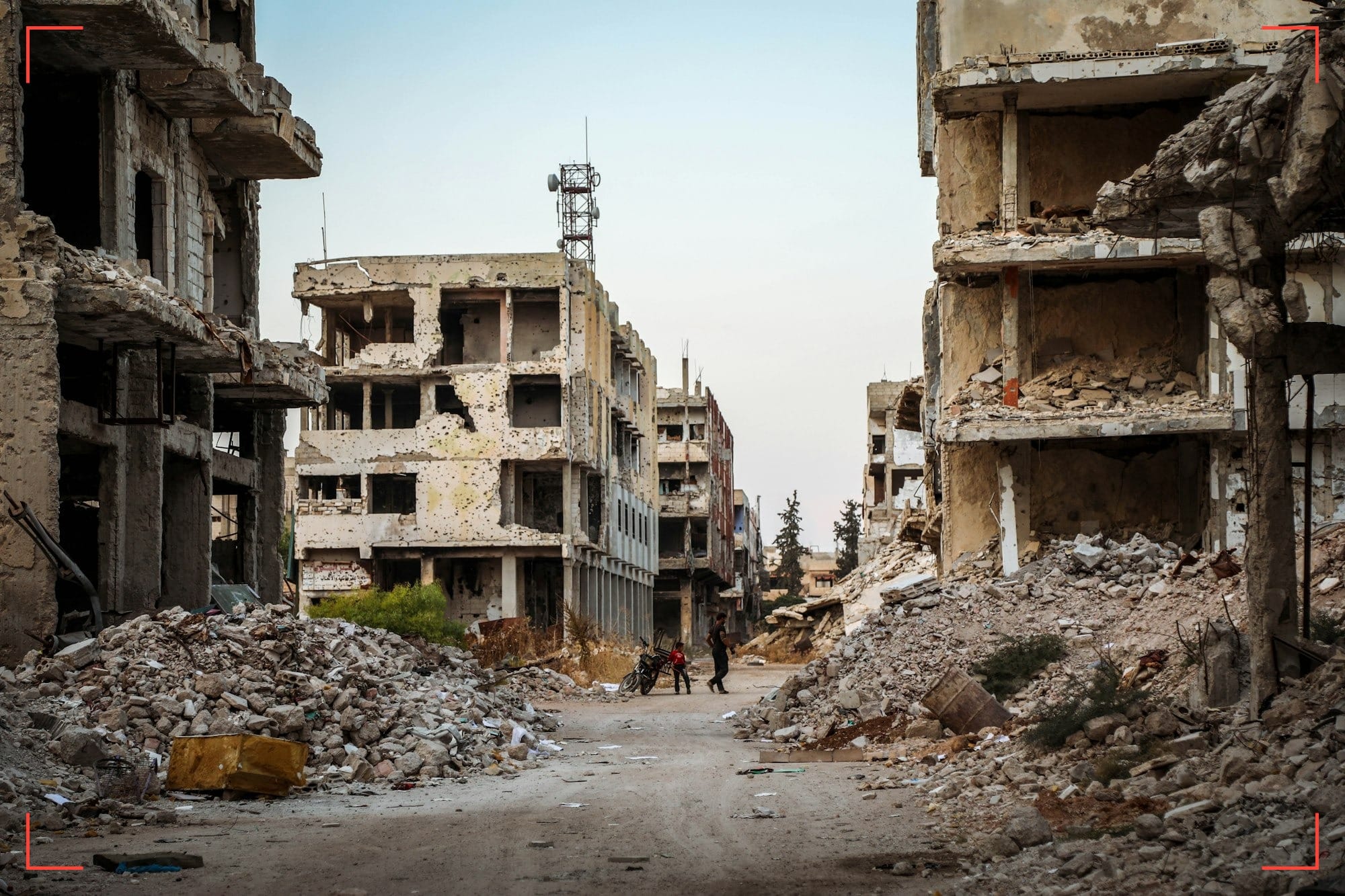
Photo by Mahmoud Sulaiman / Unsplash
Table of Content

Report Details

Initial Publish Date 
Last Updated: 01 APR 2025
Report Focus Location: Syria
Authors: AA, CM, SO
Contributors: GSAT
GSAT Lead: MF

RileySENTINEL provides timely intelligence and in-depth analysis for complex environments. Our global team blends international reach with local expertise, offering unique insights to navigate challenging operations. For custom insights or urgent consultations, contact us here

Key Points

  • Israel’s Operation Bashan Arrow marked a dramatic escalation in Southern Syria, with Israeli forces advancing into the UN buffer zone and launching over 500 airstrikes throughout December 2024.
  • The IDF destroyed up to 80% of Assad-era military assets, including advanced aircraft and missile systems, asserting strategic dominance and a policy of long-term presence in the Golan Heights.
  • Tensions remain high in Southern Syria, where Druze-majority areas have protested Israeli military actions. Meanwhile, Israel is attempting to win support by offering employment opportunities and aid to local Druze communities.
  • In Northern Syria, the collapse of the Assad regime led to Hay’at Tahrir al-Sham (HTS) capturing Aleppo and expanding control southward, while the SDF and SNA entered a power-sharing negotiation process.
  • A national unity agreement was reached to incorporate the SDF into the national army and integrate AANES structures into Syrian state institutions, significantly reducing frontline clashes.
  • Despite these developments, underground insurgent networks remain active across Northern Syria, posing a serious threat to long-term stability through potential attacks or criminal activity.
  • In Western Syria, the HTS continues to assert control over former regime strongholds in Latakia and Tartus, with violent resistance from Assad loyalists and uncertainty surrounding Russia’s military assets in the region.
  • Central Syria’s Badiya region remains a potential hotspot for an Islamic State (IS) resurgence, with indications the group has looted weapons stockpiles and may be regrouping in the security vacuum.
  • Iran-linked militias and their future role in Syria remain unclear; their withdrawal or underground persistence could significantly affect both security and regional dynamics.
  • While several areas have experienced a decline in active conflict, the risks of renewed insurgency, agricultural collapse, and political fragmentation continue to jeopardize national cohesion.

Summary

The present report, compiled to provide decision-makers and organizations operating in the field with practical, updated information, was developed bearing in mind the different regions in Syria and the characteristics of each of them. In addition, a section regarding the overall political situation was included to complete the full picture of Syria’s current landscape.

Southern Syria

An overview on the conflict in the southern part of Syria, primarily focused on recent developments in the Golan Heights and the provinces of Dara’a, Quneitra, and Al-Suwayda. 

Principal actors in this conflict include the state of Israel, the Syrian Arab Republic (including both the Assad government and the new administration), as well as the Druze minority group.

Figure 1: Assessed Control of Terrain In Syria as of March 25, 2025

Source: Institute for the Study of War. (2025, March 25). Iran Update, March 25, 2025 [Map]. https://www.understandingwar.org/sites/default/files/Iran%20Update%2C%20March%2025%2C%202025%20%28PDF%29.pdf

Historical Background

A brief overview of Syrian-Israeli relations over the course of the Arab-Israeli wars and the decades of relative peace from 1974 until Operation Basham Arrow in December 2024. The cause of Israel’s incursion into Syria will be examined as it pertains to Israeli military doctrine. 

The Arab-Israeli War of 1948-49 (Israel’s War of Independence/The Nakba)

The war began in 1948 when Israel declared itself an independent state after the UN's partition of Palestine. A coalition of five Arab nations; Syria, Egypt, Iraq, Jordan, and Lebanon attacked Israel in response. Fighting continued until February 1949, when separate agreements between Israel and the neighboring states of Egypt, Lebanon, Jordan, and Syria, were signed. The nations agreed to establish formal armistice lines, which held until 1967. 

After 1949, Syria began fortifying the western Golan Plateau, which overlooks Israeli territory including the Ḥula Valley, the Sea of Galilee, and the upper Jordan River valley. In these areas, Israeli civilians were often killed by Syrian artillery and sniper fire; making agriculture and fishing extremely difficult and sometimes impossible. 

The Arab-Israeli War of 1967 (The Six-Day War)

Before the start of the war, Israel had been continuously attacked by Fatah and other Palestinian guerrillas based in Syria, Lebanon, and Jordan. The attacks led to severe Israeli reprisals, including devastating airstrikes in Jordan in November 1966 and the destruction of six Syria fighter jets in April 1967. 

Syria feared that an invasion by Israel was forthcoming and appealed to Egypt for support, who ordered the withdrawal of UN peacekeeping forces from the Sinai Peninsula and moved its troops into the area. Jordan, the area from which the most Palestinian attacks were launched, joined the Arab coalition after signing a mutual defense treaty with Egypt. Shortly after, Iraq also joined the coalition. 

Fearing an imminent attack by the Arab states, Israel launched a preemptive strike against the three Arab states on June 5, 1967. Between June 5 and June 10, Israel fought and defeated Egypt, Jordan, and Syria and proceeded to occupy the Sinai Peninsula, the Gaza Strip, the West Bank, East Jerusalem, the southern slope of Mount Hermon, and the Golan Heights.  

Syria was the last Arab state fighting and continued to attack settlements in Northern Israel. On June 9, Israel began assaulting the fortified Golan Heights and captured it from Syrian forces after a day of heavy combat. Total casualties were approximately 1,000 for Syria and 700 for Israel. On June 10, Syria accepted the cease-fire, officially ending the “Six Day War.”

The Arab-Israeli War of 1973 (The Yom Kippur War) 

The end of the Six-Day War was followed by years of sporadic fighting, primarily between Israel and Egypt, until the beginning of the Yom Kippur War on October 6, 1973. The war was launched by Egypt and Syria in an attempt to reverse Israeli gains from the 1967 war and to persuade Israel to negotiate on terms more favorable to the Arab countries.

Egypt and Syria attacked Israel simultaneously across the Sinai Peninsula and Golan Heights respectively, swiftly repulsing Israeli forces while sustaining relatively low casualties. Syrian commandos storm and seize the IDF’s outpost on Mount Hermon.

After receiving US aid, Israel was able to cripple the Egyptian Air Force while beating the Egyptian Army back over the Suez Canal. Syrian troops were pushed out of the Golan Heights at a heavy cost to Israeli forces, who eventually reached the edge of the Golan plateau and retook the outpost on Mount Hermon. The conflict finally ended on October 26. Israel signed a formal cease-fire agreement with Egypt on November 11 and with Syria on May 31, 1974. 

The Decades of “Peace”

Following the Yom Kippur War, The Golan Heights was placed under Israeli military administration. Five villages comprised of mostly Druze Arabs remained and were offered Israeli citizenship, though most declined and retained Syrian citizenship. In 1974, Israel and Syria signed the Disengagement Agreement, establishing the borders of the buffer zone and demilitarized area within the Golan Heights controlled by UN peacekeepers of the UN Disengagement Observer Force.  

By the late 1970s, nearly 30 Jewish settlements had been established on the heights, which are considered illegal under international law. In 1981, the Israeli Parliament passed the Golan Heights Law, authorizing Israeli law over the area, effectively annexing it. Following a request from Syria, among other Arab and international countries, Israel’s act was condemned by the UN Security Council under Resolution 497. As of 2019, the only country to recognize the annexation is the US. 

A new era of negotiations between Syria and Israel began in Madrid in 1991 and continued intermittently until they broke down in 2000 over Syria’s insistence on Israel’s full withdrawal from the Golan Heights. Negotiations between the two countries resumed in 2008 through the mediation of Turkey, then a close ally of both countries. Talks fell apart once more in 2009 after the resignation of Israeli PM Ehud Olmert.

Israel's involvement in the Syrian Civil War began in January 2013 when it struck a convoy en route to supply Hezbollah militants in Lebanon. Throughout the conflict, Israel launched numerous preemptive and at times undisclosed strikes on Iranian proxies, most notably Hezbollah. In August 2016, the IDF launched Operation Good Neighbor, a mission to provide medical, infrastructure, and civilian aid to Syrians while maintaining neutrality in the conflict. More than 110 aid operations of various kinds took place, primarily in the southwestern part of the country. The operation ceased in 2018 when Assad forces reclaimed the southern regions of Syria. In 2018, Israel escalated its efforts by launching Operation Chess to prevent Iranian efforts to bring several advanced munitions into Syria, notably air defense systems. British investigative non-profit organization Airwars estimated that between 60 and 108 civilians were killed and another 42 to 101 civilians were wounded by Israeli airstrikes in Syria since 2013. These reports place these figures much lower than any other foreign actors involved in the conflict. It is also important to note that throughout the course of the war, in the Golan Heights the number of Druze residents applying for Israeli citizenship increased as the war progressed. 

Operation Bashan Arrow

On December 8, 2024, following the collapse of the Assad government, the IDF launched Operation Bashan Arrow. Israeli forces advanced past the 1974 demarcation line and into the UN buffer zone of the Golan Heights. Israeli troops also claimed the Syrian side of Mount Hermon, while simultaneously launching a massive aerial and naval campaign to strike the former regime’s abandoned assets located deeper in Syria.

Within a week, the IDF reported that the operation destroyed 70–80% of the military assets belonging to the Assad regime, including:  

  • Over 90% of Syria’s surface-to-air missiles (SAM) and 80% of the SA-17 SAM systems.
  • 40% of Syria’s fighter jets, and all of its loitering munitions. 
  • 30 MiG-29 fourth-generation fighter jets and 60 MiG-23 third-generation fighters.
  • Several Syrian Arab Air Force (SAAF) bases, as far as the T-4 Airbase in the village of Tiyas in Homs Province. 
  • Two SAAF squadrons: one consisting of SU-22 fighter-bombers, and another comprised of 10 SU-24 tactical bombers. 
  • A critical central weapons production and storage facility in Homs.
  • The UK-based Syrian Observatory for Human Rights (SOHR) recorded more than 500 Israeli airstrikes in Syria from December 8-31.

On December 14, IDF Chief of the General Staff Lieutenant General Herzi Halevi said in a statement that Israel was “not getting involved in what is happening in Syria” and that Israelis “had no intention to administer Syria.” He emphasized that Israel’s actions were motivated by the following security concerns:

  • Security of the State (of Israel). 
  • Defense along the entire border on the Golan Heights, including the northern Golan Heights and Mount Hermon. 
  • The security of the citizens of Israel and the Golan Heights. 
  • To prevent the threat of “extremist terrorist actors” entrenching along Israel's borders. 

On December 15, Israeli PM Netanyahu said in a statement that they “would determine Israeli policy in Syria according to the reality on the ground.” Regarding the Golan Heights, he said Israel would “continue to hold on to the territory, make it flourish and settle it.” This statement came just after the Israeli Parliament approved a plan to encourage expansion into the heights. Netanyahu has also said he wishes to double the population of Israeli settlers in the heights. As of 2025, about 20,000 Israeli settlers live in the Golan Heights alongside 20,000 Syrians, mostly Druze Arabs, who remained in the heights after Israel took control.

Why Syria?: The War Between Wars

Israeli operations in Syria are part of Israel’s aggressive inter-war campaign doctrine known as the "The War Between Wars" which aims to prevent adversaries from gaining an advantage in a future war, primarily through the use of preemptive airstrikes. 

Israel has conducted this form of warfare against its adversaries for decades throughout the region, primarily focusing on Iran and its proxies. Israel can limit Iran’s activities using long-range precise airpower and intelligence capabilities, therefore, enforcing its red lines without ending up in a major war. These red lines not only target Iranian expansion but signal powerful regional capabilities and contribute to deterrence against foes and inspired Sunni moderate states that are equally threatened by Iran’s activities to boost cooperation with Israel.

Relevance to Syria: 

  • The seizure of Mount Hermon, the highest point in Syria and the second highest in the Levant located between Israel, Syria, and Lebanon, provides Israel with a strategic advantage in the event of a war with its northern neighbors, particularly Hezbollah. 
  • The seizure of Syrian territory past the Golan Heights creates a larger buffer zone between Israel and potential hostile factions. 
  • The destruction of military assets in an unstable country with both a hostile regime and non-state actors ensures Israel's security. 
  • Continuous ground raids and airstrikes prevent Israel's enemies from resupplying, reorganizing, and conducting attacks. 

Figure 2: Israel Moves Troops into Buffer Zone, December 2024

Source: Moench, M. (2024, December 13). Golan Heights: Israel army prepares to stay on Mt Hermon for winter [Map]. BBC News. https://www.bbc.com/news/articles/c390j9x9w9go

Current Situation

The IDF has since established nine posts in the border area to prevent Syrian forces from gathering within 65 kilometers of the border, while also preparing to build more outposts to prevent Syria from deploying long-range weapons south of Damascus. Israeli forces have also fortified military outposts in over 12 villages and towns across Quneitra and three villages in southwest Dara'a. 

Since February 13, the Israeli military has launched over 70 ground incursions into southwestern Syria and conducted at least 31 sets of airstrikes across Syria. Israeli troops have conducted ground raids to seize weapons believed to be smuggled by Hezbollah. These raids are primarily based, but not solely focused, around the Syria-Lebanon border. The Israeli Air Force has also carried out airstrikes targeting former regime military assets, including helicopters, naval vessels, and smuggling routes. 

On February 23, Israeli PM Netanyahu called for the indefinite demilitarization of southern Syria and emphasized that the IDF would "not allow forces from Hay’at Tahrir al-Sham (HTS) or the new Syrian army to enter the area south of Damascus.” IAF fighter jets have flown at low altitudes over Syria not only as a show of force but to send a message to the new Syrian authorities that Israel will protect the Druze people in southern Syria. 

In February, residents from Quneitra province reported that the IDF offered opportunities to work within Israel during the day and return home in the evening, similar to how Gazans were allowed to work in Israel before October 7, 2023. On March 1, Israeli PM Netanyahu and Defense Minister Katz instructed the IDF to defend a Druze village in the Golan Heights after Syrian forces launched a security operation in the area. The same day, they released a statement saying, “We will not allow the terrorist regime of radical Islam in Syria to harm the Druze.”

Social Tensions 

From the start of Israel’s incursion into Syria on December 8, 2024, and continuing today,  villages and cities across the provinces of Dara’a, Quneitra, and Al-Suwayda have all seen local protests condemning Israel’s actions and the presence of the IDF in Syria. Many of these areas have a Druze majority. The latest updates in each province are included below. 

  • Al-Suwayda: On March 18, residents of Al-Suwayda city staged protests condemning Israeli airstrikes that occurred in the previous days, killing four people, including civilians, and injuring others.
  • Qunietra: On March 24, Israeli forces stormed Al-Rufayd village in Quneitra province, where they put relief assistance in front of several civilian houses. After Israeli troops withdrew, residents set fire to the provided assistance in expressing their rejection of Israel's presence in the region. 
  • Dara’a: On March 25, residents of Al-Sanmin in Dara'a province gathered to protest and condemn Israeli aggression and to commemorate the first massacre in Al-Sanmin, where Israeli forces killed seven young men during clashes in the village of Al-Koya. 

Socioeconomic Concerns

The IDF's assault on communities throughout southern Syria has led to the gradual bulldozing of farmland and fruit tree orchards. The Israeli military's method of destroying vegetation is done to "prevent the infiltration of armed militants" by constructing security barriers in their place and removing areas of cover and concealment for enemy use. Residents of Dara'a and Quntiera provinces have reported that “Israel's invasion into villages and towns in Quneitra and the Daraa countryside has negatively affected the region's farmers and beekeepers in particular, as their patrols have prevented farmers and agricultural workers from undertaking their usual activities.” 

A substantial challenge for people in the region has developed with rising costs for raw materials including honey, sugar, medicines, and farming equipment, while bee products have declined. Over 90 percent of the residents in the region are reliant on farming, livestock breeding, and beekeeping to make their living. Qunietra's reliance on summer fruits such as peaches, plums, grapes, and figs requires a substantial supply of water for trees to grow new fruit and olives. The Al-Mantara Dam is considered the most important water source for farming in the area due to the need for artificial irrigation. The IDF's seizure of the dam disrupts the local water pipeline network connecting the water to local villages and puts farmland at risk of drying up. Residents in Quneitra believe that if the current situation persists, farmers will suffer major losses this year, with up to 8,000 dunums (one dunum equals 1,000 square meters) of wheat fields and 10,000 beehives potentially at risk of failure.

Stabilizing Factors 

  • Israeli forces have been seen providing humanitarian aid to Druze people in southern Syria and the Golan Heights. 
  • Druze people have been offered employment opportunities in Israel, while still being able to live in their homelands. 
  • Druze militias agreed with the Syrian Interior Ministry on establishing locally led and structured provincial security forces under Syrian government control. 
  • Both Israel and Syria have stated they are committed to protecting minority groups in the country. 

Destabilizing Factors

  • IDF military operations will continue indefinitely throughout southern Syria. There are no indications that Israel will withdraw from Syrian land taken on December 8, 2024. 
  • Israel's refusal to allow the presence of HTS or any other forces affiliated with the country's new regime in southern Syria will likely lead to military action if the Jewish state feels it is threatened by militants in the area. 
  • Druze communities have seen large protests condemning both the actions of Israel and the new Syrian administration. 
  • There are concerns regarding the agriculture industry and water supply in southern Syria being under threat from military actions, such as bulldozing and the seizure of water supply areas. 

Northern Syria

Background

Northern Syria covers an approximately 500-kilometer stretch of land that entirely borders Turkey. The region is split between the northern portions of the governorates of Aleppo, Raqqa and Hasakah and is predominantly Sunni Arab, with notable Kurdish, Turkmen, and Assyrian communities alongside smaller communities of Armenians, Yazidis and Circassians. Due to the highly-diverse composition of the region and close proximity to Turkey, Northern Syria is among the most volatile fronts of the country. 

Figure 3: Faction Map of Northern Syria in March 2025

Source: Liveuamap. (n.d.). Map of Syrian Civil War: Syria news and incidents. https://syria.liveuamap.com/


This is especially the case in Northern Aleppo which, at the peak of the conflict, saw the presence of all major factions: SAA and allied pro-Assad militias, Turkish-backed and independent FSA factions, Jabhat al-Nusra (which would later rebrand into the HTS), the SDF, and the IS.

Figure 4: Faction Map of Northern Aleppo in February 2017

Source: Liveuamap. (n.d.). Map of Syrian Civil War: Syria news and incidents. https://syria.liveuamap.com/

Key Factions

The Syrian Democratic Forces (SDF)

Founded in 2015 in collaboration with the US-led International Coalition, the SDF is a coalition of factions founded primarily to combat the IS. Although Arab, Assyrian, Armenian and Turkmen factions compose the group, its primary component is the People’s Protection Units (YPG), a Kurdish group that Turkish officials accuse of having links to the Kurdistan Workers Party (PKK). Following the withdrawal of the SAA from Kurdish-populated provinces such as Hasakah, the YPG became the de facto authority in many parts of northern Syria. The secular ideology of the YPG as well as pre-existing ethnic tensions resulted in frequent clashes with the Syrian Opposition. 

After Turkey raised objections to the growing partnership between the International Coalition and the YPG, the International Coalition facilitated the creation of the SDF by incorporating a number of other regional factions, becoming an umbrella organization. However, these efforts did not allay Turkish concerns, leading to deterioration of relations between Ankara and Washington. Despite Turkish objections, collaboration with the International Coalition continued, and the group successfully pushed the IS back, culminating in the capture of the group’s capital, Raqqa. In 2018, the SDF established a civilian governance under the name ‘Autonomous Administration of North and East Syria’ (AANES), informally known as Rojava.

The Syrian National Army (SNA)

Early into the conflict, numerous formations of the Syrian Arab Army (SAA) refused to attack the civilian protesters and defected, forming an umbrella group known as the Free Syrian Army (FSA). Although the FSA received significant material and political support from foreign powers, the group nevertheless fragmented, a process that was exacerbated by the emergence of jihadi factions with more mature networks and organizational capacity.  In response, Ankara reformed the FSA factions under its umbrella, as well as a number of non-FSA factions like Jaish al-Islam and Ahrar al-Sham, into a new, and more cohesive organization dubbed the ‘Syrian National Army’. The SNA became the official military force of the also-Turkish-backed Syrian Interim Government (SIG) based out of the town of A’zaz in northern Aleppo. Although the SNA was successful in becoming a more cohesive unit, there remain many allegations of SNA fighters engaging in looting, abductions, summary executions and torture. 

The group was something of an outlier during the HTS offensive to topple Assad, and did not mobilize until the SAA’s collapse was well underway. When it did, it launched Operation Fajr al-Hurriyah (Operation Dawn of Victory) and targeted the SDF instead, resulting in the SNA taking control of the towns of Tal Rifaat and Manbij and clashes around the Tishreen Dam. 

The SNA accepted the HTS’ call to dissolve and join the new national army. At least one SNA commander, Mohammed al-Jassem better known as Abu Amsha, was promoted to a division commander.  However, some SNA members expressed concerns about being sidelined.

Insurgent Factions

In addition to major military factions, numerous factions exist in northern Syria, operating underground in a bid to launch insurgent attacks. The Islamic State (IS), which ruled over vast stretches of Iraq and Syria, is the prime threat. However, the region is home to insurgent groups of every affiliation.

After the IS lost its final territorial holdings in 2019, it reverted to an insurgency model. In SDF-held areas, the IS targeted community leaders and other soft targets to hamper security and governance. However, their main goal is to free the thousands of IS militants held by the SDF. 

A number of other insurgent groups operated across northern Syria, their activities often short-lived and their exact affiliations unclear. Nevertheless, their existence suggests the existence of underground networks that could result in a new round of insurgencies. 

Chief among such factions is the ‘Wrath of Olives Operations Room’. The group activated after the Turkish-backed forces captured the Afrin region from the YPG during Operation Olive Branch in 2018. The group is widely considered linked to the YPG and launched numerous attacks against the FSA and the SNA in 2018 and 2019 before its activities petered out. 

Another group that launched a short-lived insurgency was Harakat al-Qiyam (The Eruption Movement) which conducted guerrilla attacks against the SDF, primarily around Manbij. The group was accused of links to Turkish intelligence and is best known for its bizarre propaganda videos. Its activities ebbed out in late 2018 after the YPG announced the arrest of four members.

Another insurgent group operating in SDF-held areas was Popular Resistance in the Eastern Region, a pro-Assad faction ostensibly backed by Iranian or Syrian intelligence. Although the group primarily targeted the SDF, it also expressed opposition to the Turkish presence in Syria. The group was sporadically active between 2018 and 2025 and is considered to have been dismantled after the SDF broke up a cell in early 2025. 

Despite the limited impact and capacity these groups have, it highlights the existence of numerous underground networks that can be exploited by both spoiler and criminal factions.

Key Developments

Due to its strategic significance and volatility, the region witnessed several major developments.

In 2012, Syrian rebel factions took control of the eastern half of Aleppo, Syria’s second-largest city. After a four-year stalemate ended in late 2016, the SAA successfully took control of Aleppo following an intense siege that saw widespread destruction and civilian death, while being heavily backed by Russia and Iran. The capture of the city marked a turning point for the fortunes of the Syrian Opposition, with a number of other SAA victories following. The Battle of Aleppo is widely considered as the point international observers concluded Assadist rule over Syria would continue. 

In late 2014 and early 2015, the IS attempted to take control of the town of Kobani along the Turkish border, resulting in intense clashes with the Kurdish YPG that controlled the town. The YPG’s defense of the town attracted significant international attention, including airstrikes by the US-led Coalition. The International Coalition would go on to increase its involvement in Syria, with the YPG later becoming a core component of the SDF. In 2017, the SDF successfully ousted IS from its self-proclaimed ‘capital’ of Raqqa, gaining control of much of the territory north of the Euphrates, including all of Hasakah, significant parts of Raqqa, and the northern half of Deir ez-Zor provinces.

Congruent with the Siege of Aleppo was the Operation Euphrates Shield. The operation was launched in August 2016 in collaboration between the Turkish Armed Forces (TSK) and the Turkish-backed FSA factions, it marked the first point in which Ankara directly intervened in Syria’s conflict. Although the IS was the main target, the operation is widely regarded as an attempt to prevent the YPG from linking its territories in Afrin (northwest Aleppo countryside) with those in the rest of northern Syria. Two more operations followed, with early 2018 seeing Operation Olive Branch targeting the YPG directly in its Afrin enclave, ousting the group from the region. The clashes resulted in significant displacement of Kurdish populations. A third operation, Peace Shield, took place in October 2019, targeting a sliver of land along the Turkish border between the towns of Tal Abyad in Northern Raqqa and Ras al-Ain in Northern Hasakah, straddling the M4 Highway. Together, these operations represented a significant shift in recent Turkish foreign policy, which, until that point, had avoided direct military interventions.

In the aftermath of the IS’ territorial defeat in Syria at the hands of the International Coalition and the SDF between 2017 and 2019, many actual or suspected militants and their families were placed in holding facilities such as the Sina Prison in Hasakah City, as well as refugee camps such as al-Roj and al-Hol. The SDF frequently warned that the IS would try to break these militants out, and requested international support to repatriate the foreign militants to their countries while facilitating a more permanent solution for the Syrian militants. These fears were realized in January 2021 when the IS attacked the Sina Prison, breaching the gates and successfully releasing a number of prisoners. The escape attempt was eventually contained, with nearly 400 prisoners killed. However, some IS leaders managed to escape. The SDF has since continued to warn that the escape or release of these prisoners would allow the IS to reconstitute. 

Following the Idlib clashes in early 2020, Syria’s conflict entered a frozen state, where it would remain until November 2024. However, Northern Syria continued to experience frequent tensions and clashes. The majority of these clashes were between the SDF and the Turkish-backed FSA factions that were reorganized into SNA in 2017. These clashes were concentrated around the towns of Manbij and Tal Rifaat in the northern Aleppo countrysides. As the first Arab-majority town to be captured by the SDF, Manbij, in particular, has been a recurring source of tensions in particular. Despite Turkish threats to launch a new round of operations to capture these areas, the anticipated escalation never took place. Over the next four years, the region would settle into an uneasy calm, skirmishes, and raids between the SNA and the SDF would continue. 

Assad’s Fall and the Current Situation

The uneasy calm that pervaded the region and, indeed, the whole country, would shatter on November 27, 2024, when HTS launched an operation against SAA positions around Aleppo City. The operation was ostensibly launched to put an end to the SAA shelling of Opposition-held Idlib and Aleppo. However, the scope and scale of the operations quickly expanded amidst the rapid collapse of the SAA. On December 2, 2024, HTS took control of Aleppo City with very limited fighting.  HTS went on to expand its control across much of the areas vacated by the SAA, subsequently pushing south to capture the cities of Hama, Homs and, by December 8, 2024, Damascus. Through it all, clashes between  HTS and the SDF remained minimal. Following the collapse of the Ba’athist state and Bashar al-Assad fleeing to Russia, the HTS and the SDF entered negotiations on how to achieve national unity.

The HTS offensive and the SAA’s collapse offered the SNA the opportunity to finally launch its long-awaited operations at Tal Rifaat and Manbij. Tal Rifaat came under SNA control on December 2, 2024, and Manbij on December 10. Since Assad’s fall, clashes in the region continued, particularly around the Tishreen Dam not far from Manbij. These clashes, employing frequent UAV attacks, ambushes and bombings, saw no gains from either side amidst concerns that the region would be engulfed in a new round of conflict. However, after intensive negotiations between the Syrian Transitional Government and the SDF, the two sides signed an agreement that would see the SDF merged into the national army, and the AANES incorporated into state institutions. While the future of the agreement and the prospects for its implementation remain unclear, it appears that the agreement has eased tensions, with clashes subsiding significantly since. 

Stabilizing Factors

  • The agreement to incorporate the SDF into the new Syrian Government, and the resulting decline in clashes across northern Syria, is a positive step for stability. The reactivation of the Kurdish peace process in Turkey likely also serves as a stabilizing factor. Furthermore, the successful outcome of these processes will likely reduce the possibility of a new Turkish incursion into Syria while allowing further reconstruction to take place across the AANES.
  • Similarly, the decision by the SNA to accept the HTS authority and incorporate its forces into the new national army is a positive sign towards military cohesion. This may also help bolster the limited capacities of the HTS to ensure security. 
  • The gradual decline of tensions may allow for governance to take hold in disputed areas, and for displaced citizens to return.
  • The absence of major prison breaks by the IS during Assad’s fall suggests security has not been adversely impacted by local and regional developments. High-ranking US officials such as Marco Rubio, despite the present US Administration’s desire to leave Syria, also indicated that abandoning the prisons is not in the national interest.

Destabilizing Factors

  • There remain significant hurdles around the integration of the SDF. Failure to achieve the desired outcomes are likely to renew armed clashes in northern Syria, leading into new waves of displacement and instability.
  • The IS still has the capacity and will to launch attacks, and is likely eager to exploit this moment of governance vacuum and transition. A single successful prison break may be alone for the group to bolster its ranks. 
  • The promotion of SNA commanders, with tarnished records of violence against other Syrians, is a concerning sign for the future of law-and-order in the country. Areas outside major cities in the north are likely to see continued acts of criminality and militia impunity by these factions, especially as they remain in control of their home territories. Despite pledging loyalty to the new government, areas under SNA control are unlikely to change in the short-to-medium term.
  • The presence of insurgency networks across northern Syria linked to various groups and interests makes spoilership a highly likely possibility. Even absent spoilership, these networks may be used by organized crime and smuggling.

Western Syria 

Factions/key players

The western part of Syria is predominantly dominated by the HTS rebel group, which was initially part of al-Qaeda. This group was established in 2011 under the name of Jabhat al-Nusra as a direct affiliate of al-Qaeda, but later in 2017 changed its name to HTS, broke ties with al-Qaeda and merged with similar groups in the region. HTS broke ties with al-Qaeda to recalibrate the organization’s image to focus on the national cause rather than transnational jihadism.

Figure 5: Territorial Control in Syria as of December 2024


Source: VOA News. (2024, December 16). Who controls Syria after Assad? [Map]. https://www.voanews.com/a/who-controls-syria-after-assad/7903494.html

Although HTS aims to be seen as a stable group focused on local government, it still remains listed as a terrorist group by Turkey and the United States. Additionally, the group also faces allegations of human rights abuses and has had conflict with other rebel groups in the region. 

HTS and the Syrian Arab Army had serious clashes in the north-western part of the country when HTS broke through the Syrian Arab Army’s defense at the end of November 2024 and captured Aleppo. The SAA is a number of armed groups brought together in 2017 under the supervision of Syrian Interim Government, which is a coalition of Syrian opposition organizations who want to overthrow the al-Assad regime, but is not in favor of HTS. The SNA is allegedly backed by Turkey, where critics against the SNA allege that Turkey is using the group to drive its anti-Kurdish agenda.

Turkey also played an indirect role in the conflict in the conflict of North-Western Syria. The country tried to exert its own influence on the conflict by supporting various rebel groups, but also trying to establish control among the rebel groups. For example, in 2017 and 2018 Turkey implemented a ‘divide-and-rule’ policy which sought to separate pragmatic factions in HTS from dogmatic factions in the same organization, to separate the moderate opposition from the ‘terrorists’. The reason for Turkey’s involvement is because of rebel group’s’ close operations to the Turkish border and Turkey considering this as a threat to national security. Turkey aimed to bring together HTS, SNA and various other opposition coalitions, together as a single organization. However, the different rebel groups had conflicting opinions and ideologies, which ultimately led to the fracturing of the ‘divide-and-rule’ strategy.

Historical background

2011-2018

Both Latakia and Tartus were historical strongholds for the al-Assad government because most of Syria’s ruling elite, including government officials, politicians and military officers, belonged to the Alawite sect, which is the predominant Muslim sect in Latakia and Tartus. Therefore, during the Syrian Civil War, these two cities did not experience many protests. Although these two cities and the neighboring regions did experience two significant events of turmoil between 2011 and 2016. 

The first big event was the August 2013 Latakia offensive whereby the rebel group, the FSA, launched an offensive to capture villages around Latakia, which at the time was still under the control of the al-Assad government. The Syrian military launched a counter-attack whereby it regained most of the villages the government lost to the FSA. Numerous acts of violence were committed against the local Alawite communities during this period, including the killing of 190 civilians and the abduction of more than 200. Following this military offensive, support for Assad increased, and many loyalist militias gained recruits from the local communities. 

The second big event consolidated the al-Assad government dominance in the region, which was the Russian military interference in September 2015. In the aftermath, the Russian military permanently occupied the Khmeimim Air Base, in agreement with the al-Assad government. The al-Assad regime enjoyed great support from Russia, and as a consequence the Russian occupation of the Khmeimim Air Base only further entrenched the dominance of the government in the region. Additionally, Russia also had a naval base in Tartus since 1971, during the Soviet Union, and enjoyed the use of the facility until late 2024 with the support of the al-Assad regime. 

With Russia’s support, the Assad government retained its hold of the Latakia and Tartus regions. However, in 2018 Turkey started to increase its support for the other rebel groups operating in the region such as HTS and FSA. Therefore, from 2018 onwards, with Turkey’s support, these rebel groups started to make inroads into the government’s established regions. 

2018 - present

From 2018 onwards rebel groups operated out of the northwestern part of the country, attacking government strongholds in the Latakia and Tartus regions. Similarly, the government also started to lose their strong position due to Israel targeting the Latakia ports on grounds that military equipment was allegedly shipped from Iran through the port for Hezbollah and Hamas. Additionally, Russia’s support to Syria decreased after the 2022 full-scale invasion of Ukraine. Russia’s diminished support left the Assad government in a more vulnerable position. Israel’s attacks on western Syria increased after the October 2023 attacks, when Israel’s conflict with Hezbollah and Hamas dramatically escalated. 

These changes in dynamics allowed for HTS to increase its attacks in western Syria and started to gain more territory. As discussed above, this is also due to HTS’ increased military and operations capacity. Therefore, since December 2022 clashes between the government and HTS significantly increased, especially in the cities of Idlib, Aleppo, Hama, and Latakia. From December 2022 to December 2024 various intense clashes took place, which ultimately led to the overthrow of the government in early December 2024. 

Current situation

On March 6, 2025, unrest broke out in the Latakia region between remnants of pro-Assad groups and the new government. On March 6, pro-Assad forces ambushed military personnel of the new government around Latakia and killed at least 16 members. The conflict intensified when state security groups confronted these armed groups. Civilians were also victims to this conflict, where reportedly 200 people have been killed and an additional 140 have been killed in revenge killings in villages, which includes 50 members of Syria’s government and 45 fighters loyal to Assad.

To retain control of the situation, Assad’s loyalists in Latakia and Tartus, the new government sent reinforcements to military personnel and enforced a curfew across the two provinces in both Latakia and Tartus but also in other coastal towns. Presently, there are no villages under the control of Assad loyalists. However, their presence in the region persists. 

Nevertheless, these incidents are some of the most violent incidents since the end of the Assad regime in early December 2024. Assad-loyalists reacted to the government reinforcements by burning state property and killing soldiers of the new regime. 

What also remains an uncertainty in the region is Russia’s involvement regarding the Khmeimim Air Base and the naval base at Tartus. As of early December 2024 no official statement or decision has been made of whether Russia will retain control of the air and naval bases. Many Syrians are opposed to Russian involvement because of their support for the Assad regime; however, the new government has stated in January 2025 that they are open to possible future cooperation with Russia. 

Stabilizing factors

  • The new Syrian government has resources to launch a coordinated offense
  • Most Syrians, except for many of the Alawites, seem to have accepted the new government 
  • The Syrian government is clamping down on military equipment being shipped through the country, diminishing the chances of Israel attacking Latakia

Destabilizing factors (geopolitical/regional factors)

  • Assad loyalists have not accepted the new government, which is highly likely to cause future unrest, as it has done now
  • The extent of Turkey’s involvement and investment into HTS and other rebel groups remain unknown. Therefore, Turkey’s anti-kurdish agenda in northwestern Syria could have the potential of causing divisions and initiating conflict

Central Syria

Background

Central Syria is largely composed of Badiya al-Sham, the Syrian Desert, which straddles the southern portions of Raqqa and Deir ez-Zor provinces as well as a significant portion of Homs, Hama, and Damascus governorates. Despite the large territory it covers, it is sparsely populated and hostile, making it an ideal location for insurgency actions. Nevertheless, the region is also strategic, especially for Iran, which utilized Syria’s long and porous border with Iraq to supply its allies in Syria and Lebanon. 

Figure 6: Faction Map of Central Syria in March 2025. IS Presence is not depicted 

Source: Liveuamap. (n.d.). Map of Syrian Civil War: Syria news and incidents. https://syria.liveuamap.com/

Key Factions, Events, and Current Situation

The Islamic State (IS)

The recent history of the Badiya is highly tied to the history of the IS in the region, with the group’s rise and fall reflecting the major developments in the region.

Following the US invasion of Iraq in 2003, the Badiya region, particularly the border-town of Albu Kamal, became a transit point for jihadi militants. The movements of these militants were reportedly facilitated by Syrian intelligence in hopes that their activities would keep the US distracted while also ridding Syria of its homegrown jihadi militant problem.

Due to the sparsely populated makeup of the region, the Badiya did not witness significant protests and clashes during the early stages of the conflict. The most significant protests took place in the city of Deir ez-Zor, with these protests violently clamped down by the authorities, as was the case elsewhere in the country. Despite the clampdown, a small and disorganized FSA presence managed to establish itself. However, the FSA presence did not last long. With the outbreak of the war, many of the jihadi militants that  entered Iraq via Syria used these same networks to return to the country and establish a foothold. These militants consolidated under two al-Qaeda factions: Jabhat al-Nusra as the Syrian franchise, and the IS as the Iraqi faction. 

However, in early 2014, relations between the two groups publicly broke down. The IS successfully pushed Jabhat al-Nusra and the FSA factions out and quickly took over vast swathes of the region, putting the SAA in Deir ez-Zor City under a withering siege even as it expanded its control westwards. The region would go on to remain under IS control between 2014 and 2017, with the group committing numerous atrocities against the local tribes. The group also captured the town of Tadmur in central Syria and engaged in widespread destruction of heritage sites in the nearby archaeological site of Palmyra

In 2017, as the IS lost territories across Syria, the SAA launched a military operation to link its holdings in western Syria with the holdouts in Deir ez-Zor. Aided by the Russian Air Force, the SAA went on to secure the highway between Deir ez-Zor City and the town of Sukhnah before ending the siege on the city itself. However, the IS insurgency in the desert persisted, and the group launched attacks on the SAA with some frequency. Meanwhile, eager to exploit its newly gained ground connection to Iraq, Iranian forces established a strong presence, particularly around the town of Albu Kamal.

In June 2024, US Central Command (CENTCOM) warned that the number of IS attacks in Iraq and Syria had reached new heights, warning that the group is reconsolidating. The CENTCOM warning did not specify where the attacks took place. However, an analysis of the attacks found that most of them took place in Badiya. More significantly, some analysts found signs of the IS underreporting its Badiya attacks, perhaps in an attempt to avoid drawing international attention. 

As was the case across Syria, the SAA in Badiya abandoned its bases and large quantities of equipment during its retreat in late 2024. The US warned that it had conducted a drone strike on a “truckload” of weapons the IS had likely looted from a weapons stockpile. In a bid to prevent this outcome, the US Air Force conducted numerous airstrikes on suspected IS positions. Despite the volatility of the situation there have not been any notable IS-linked attacks since Assad’s fall. This might mean the group is biding its strength, that it is exploiting the vacuum to move to other parts of Syria to establish cells, or that individual militants are demobilizing in response to Assad’s fall.

Other Factions

The only other major faction present in the region is the forces of the Syrian Transitional Government, with the fighters themselves likely belonging to the HTS. These forces took over the Badiya with relative ease following the SAA’s withdrawal. However, the HTS does not have the manpower or local familiarity with the region. Furthermore, the transitional government itself is focused on flashpoints in other parts of the country, such as Latakia. As such, it does not have the resources or motivation to comb the desert for IS cells. 

Given the mutual history between the HTS and the IS, there is a possibility that the two sides might engage in back-channel talks to facilitate a quiet demobilization of rank-and-file militants. However, there is presently no evidence to suggest this. In fact, the US reported that it has engaged in some intelligence sharing with Damascus, successfully preventing an IS attack on a Shia Mosque in Damascus’ Sayyida Zainab district. 

Another local faction whose presence is likely to be of impact are Iranian forces affiliated with the Islamic Revolutionary Guard Corps (IRGC) and militias linked to them. These militias had a particularly strong presence along the Iraqi border, in the areas around Albu Kamal. In the aftermath of Assad’s fall, Iran-affiliated groups abandoned their bases across the country. Some Iraqi militias linked to the Popular Mobilization Units have withdrawn back to Iraq. However, it remains unclear if the Syrian operatives belonging to these groups remain in the country. If they are still present, there is a likelihood that these operatives will regroup, and may even engage in spoilership and other actions to push Iranian interests or otherwise allow other insurgents to exploit the terrain. Furthermore, threats by some Iran-affiliated militias to attack the US forces in Iraq and Syria points to these groups still having some reach in the region. These groups could potentially launch cross-border attacks without entering the Badiya.

Indeed, the most likely location for an attack would be the International Coalition base at Tanf. Located along the region of the Badiya where the Syrian, Jordanian and Iraqi borders intersect, the Tanf base had a Coalition garrison since 2016, with a perimeter of 55 kilometers established alongside an FSA faction known as Maghawir al-Thawra. These forces, whose operations focused predominantly on countering the IS and Iranians, remain in the region. The group expressed no hostility to the transitional government, and was reported to have participated in talks with the central authorities. Given their experience in the Badiya, it is possible that these forces may serve as a liaison between Damascus and the International Coalition.

Stabilizing Factors

  • Sustained calm in the region points to a relatively positive security environment. 
  • Signs of collaboration against the IS between the Syrian Transitional Government and the International Coalition will help reduce risks of the militants exploiting security and intelligence grey zones. 
  • Collaboration with the International Coalition may also offer room for reduced tensions between the Syrian Transitional Government, and the SDF operating north of the Euphrates. 
  • Withdrawal of Iran-linked militias will likely be a positive development for regional stability and cohesion. 

Destabilizing Factors

  • The IS threat remains, and the group may be biding its time to re-emerge. Reports of weapons looted by the group may be a sign of the group rebuilding strength. 
  • The exact whereabouts of Iran-affiliated militias and operatives are unknown. If they have gone underground, they too could threaten local stability. 
  • The relatively-low priority placed on the region by the transitional authorities, and their lack of resources to secure the whole region, likely means that early response to a developing crisis is unlikely. 

Overall Political Situation

Domestic Politics

Although Syria’s Ba’athist state collapsed rapidly, the legacy of over fifty years of authoritarian rule will be difficult to overcome. While the lack of widespread clashes and violence in the aftermath of Assad’s fall is a positive sign for the future, Syria’s socio-political and economic terrain remains highly-divided. Furthermore, the country’s economy has been virtually destroyed. The economic grievances that led to the initial protest movement remain unaddressed and are compounded by widespread destruction across the country. The UN warned that Syria’s economic recovery could take up to half a century.

As the transitional authorities in Damascus work to unite the country, they will have to contend with these legacies.

Following Assad’s fall, HTS leader Abu Muhammad al-Jolani—now using his legal name, Ahmed al-Sharaa—was appointed president. In his first speech after accepting the role, Sharaa announced his intention to build the institutions necessary for holding free and fair elections, with a transitional period expected to last between three and five years. He also outlined the immediate priorities of this phase: achieving civil peace, unifying Syrian territory, strengthening institutions, and laying the groundwork for a robust economy.

Unlike many rebel groups who rise to power but fail to govern due to lack of experience, the HTS already has some experience in governance. In its enclave in Idlib, the HTS assembled a government by the name of the Syrian Salvation Government (SSG), establishing a highly-technocratic, Sharia-based governance model. The group successfully installed governance in Aleppo City within days of assuming control, and many SSG officials have since been incorporated into the transitional government. For better or worse, Syria’s new rulers already have a template to base their government on, rather than building one from scratch. 

However, the transitional government under Sharaa will nevertheless face serious challenges relating to both political fragmentation, and concerns around the SSG’s own governance which, despite its successes, also remained authoritarian.

Domestic Political Disunity

Domestic political disunity will be one of the greatest challenges the transitional government will face. Although the HTS’ role in dismantling the Ba’athist state garnered Sharaa and his faction great legitimacy, the coalition of factions that brought him to power remains diverse. The HTS already contended with opposition to its rule within the relative ethno-religious homogeneity of Idlib. Now it faces the challenge of exercising authority in a country far more diverse than Idlib. 

So far, Sharaa’s strategy has been to create buy-ins from the Opposition factions. Under the new government, prominent SNA leaders, as well as foreign jihadi militants were given posts. The SIG based in A’zaz was also incorporated into the transitional government, bolstering the buy-in and the governance capacity. Sharaa also sought to allay the fears of the country’s Christian community, many of whom still remember the atrocities committed against them by Jabhat al-Nusra. 

Presently, the main political challenges to Sharaa’s goal of achieving domestic unity comes from the SDF and the Druze factions in Suwayda. 

The SDF, through the AANES, retains control of a significant portion of the country, including a majority of Syria's oil fields in Hasakah and Deir ez-Zor. While these factors, alongside support from the International Coalition, grant the SDF some advantage, the group faces political headwinds and pressure from Turkey. During its negotiations with Damascus, the SDF initially demanded the autonomy of the group, and AANES as a whole. After these demands were rejected, the two sides continued talks, eventually agreeing to integrate the SDF into the country’s new army amidst a phased integration of the AANES and the central management of Syria’s oil fields. Although the agreement is a positive step towards stability, many details on how the integration will proceed remain unaddressed. As such, there remains a likelihood of renewed tensions. 

A similar situation is unfolding in Suwayda which is populated by the Druze minority. For much of Syria’s conflict, the Druze community, primarily through the ‘Men of Dignity’ movement, maintained a limited form of autonomy and resisted any attempts by Damascus to exercise more control. In the aftermath of Assad’s fall and the establishment of a caretaker authority, the Druze factions expressed concerns about ‘mismanagement’ from the central authorities and declared they would hold action until the character of the new Syrian state becomes clear. Like the Christian community, the Druze community in Idlib was persecuted, giving them a strong reason for suspicion. 

Unlike the SDF, attempts to incorporate the Druze into the central government have not been successful. There were initial reports of an agreement in early March 2025. However, it appears that the signing of the country’s new temporary constitution has changed this outlook. The constitution, which enshrines significant executive power to a Muslim head of state with no checks and balances, was criticized by the Druze. The Druze spiritual leader, Hikmat al-Hijri, rejected the previously-announced agreement, calling the transitional government ‘radical’. The situation remains volatile, with Israel seemingly looking to court the Druze as well. 

Sharaa’s efforts at being pragmatic will likely face resistance from the HTS’ ‘true believers’ as well. In the days following the HTS entering Aleppo and Damascus, there have been numerous reported instances of rank-and-file fighters and their commanders attempting to enforce strict moral codes in line with Idlib’s Islamic governance, and engaging in sectarianized attacks. However, Sharaa repeatedly intervened in these efforts, calling his men to leave Christian symbols and Shia shrines intact. There have been reports that the rank-and-file militants are becoming frustrated. With similar frustrations present within the SNA, there is a likelihood that Sharaa’s core constituent of supporters may turn against him. Indeed, one Syrian analyst described this demographic as Sharaa’s greatest challenge. While Sharaa is adept at navigating Sunni politics, he will nevertheless face an uphill battle towards establishing legitimacy across the country. 

Resurgent Authoritarianism

Facing such a broad array of challenges and endemic disunity, there is every possibility that the lure of authoritarian governance will prove too tempting to resist for Sharaa and his cohorts.  HTS rule over Idlib will prove instructive here.

After HTS established the SSG in Idlib in 2017, it went on to destroy, incorporate, merge, or dismantle the factions that opposed its rule. However, the group displayed a level of pragmatism when dealing with opposition and protests: if the protesters demanded specific material conditions such as the release of an individual or the removal of checkpoints, HTS usually acquiesced. However, political opposition and demands for profound changes to HTS were suppressed violently.

There is a considerable risk that this mode of governance will be applied across Syria, with civil matters treated with leniency even as politics remains tightly controlled by the HTS. Syria’s transitional constitution will likely fuel these fears: although the constitution includes provisions for freedom of speech, press, and women’s rights, it also concentrates power in the presidency and cites Islamic law as the primary source of legal authority, with only Muslims authorized as the head of state. Furthermore, it offers no checks and balances, and does not offer democratic representation for the duration of the five-year transitional period. When questioned about some communities being sidelined, a high-ranking HTS official was quoted saying, “he who liberates, decides,” highlighting the attitude present within the group. 

The appointments of SNA commanders such as Abu Amsha, who is implicated with numerous war crimes, to high-ranking military positions have raised similar concerns. The promotion of foreign jihadi militants and the prospects that they could be naturalized as Syrian citizens raised similar concerns that Sharaa’s government will not be representative of Syrian society as a whole.

Although Sharaa and HTS are currently enjoying a high level of legitimacy, experiences of Islamist revolutionary governance in countries like Egypt, Libya, and Tunisia might prove instructive: in all instances, attempts to impose an overtly Islamic governance resulted in the government losing legitimacy. In Syria, where many diverse communities and armed groups suspicious of Islamist governance are present, any authoritarian overreach is likely to have serious ramifications. 

Foreign Policy

The swift collapse of the Assad government brings a humiliating end to Russian and Iranian foreign policy objectives while opening the door for influence from other regional players, most notably Turkey and Israel. The regional response towards Syria is largely portrayed through two different approaches: interventionist and diplomatic. 

Interventionist Approaches

Israel: Most notably in the southern provinces, Israel struck Syria more than 500 times in just the month of December, invaded and occupied the demilitarized zone between the two states, and conducted more than 70 ground incursions since February 13. Israeli strikes have destroyed at least 80 percent of Syria’s military capabilities, all while the IDF continually conducts ground and air operations throughout southern Syria, reaching targets as far as Homs province. Israel's controversial plan to double the number of settlers in the Golan Heights and refusal to withdraw from annexed territories have led to outrage and protests throughout Syria, particularly among Druze communities amid fears that the Jewish state is not merely securing its borders, but territorially expanding at its neighbor's expense. 

Turkey: While often divided between helping the Assad government or overthrowing it, no actor has been more involved in rebuilding Syria post-Assad than Turkey. Seeing the opportunity for a regional power play, Ankara began its strong support soon after HTS militants seized control in Damascus. On December 20, Turkish President Erdoğan proclaimed that Turkey would help the new Syrian government write a new and inclusive constitution, while confirming that Ankara has been in contact with HTS officials. Ankara has since been in support of helping Damascus towards the formation of a new government. Syria’s domestic policies are of strategic relevance to Turkey’s domestic and regional objectives, primarily concerning the Kurdish question. The return of Syrian refugees to their homeland, the demilitarization of the SDF, and the end of hostilities and border incursions from Kurdish separatist militant groups are some of Turkey's top priorities in Syria that have still yet to be solved. 

Israel and Turkey: Recent Israeli airstrikes against air bases in central Syria have led some Syria analysts to speculate that Israel was signaling its firm opposition to Turkey’s military presence in Syria to the new caretaker government in Damascus and its Ankara backer. There have also been concerns in Israel over Turkey and its close ties with Sharaa, which could lead to expanding and rebuilding its military in post-Assad Syria. In February, Israel was reportedly lobbying the US not to pressure Russia to withdraw from Syria, arguing that the Russian military's disappearance from Syria would only result in a power vacuum that Ankara would not hesitate to fill. Israeli PM Netanyahu held a security meeting on March 23 to discuss Turkey’s involvement in Syria. Any attempt by Ankara to help Syria establish new air defenses would likely encounter many of the same obstacles Russia and Iran did over the past decade. Making it unlikely that there will be a serious contention in the battle for air supremacy in Syria between Israel and Turkey. 

Iran: Iran's positive relationship with the Assad government dates back to 1979, while their support of government forces during the Syrian Civil War began at the conflict's inception in 2011. Over the past thirteen years, Iran has invested an estimated $30–50 billion in Syria in order to ensure the survival of the Assad government. Tehran focused on entrenching its influence in the provinces of Aleppo, Homs, Deir ez-Zor, and the Lebanese border area through its support of local pro-Iranian groups including Iraqi and Afghan militias, Hezbollah, and the Local Defense Forces, not to mention its own fighters. Elite troops from Iran's Islamic Revolutionary Guard Corps (IRGC) became the principal foreign actors backing the Assad government. Iran's role in supplying Shiite fighters, from the IRGC to foreign volunteer militias, once played a critical role in changing the course of the war in favor of Assad's forces against the Western-backed rebels and militia groups, most notably in Aleppo in 2016. Iran's involvement throughout the conflict in Syria is not only meant to support a neighboring ally, but also to maintain a strategic foothold in the country for the long term, allowing it to supply its proxies in Lebanon and Palestine further. The fall of the Assad government is detrimental to the Persian state's interests in the region and greatly diminishes its ability to further rearm its proxies in the region. Despite the setback, Iran has pledged to continue its involvement in Syria, with its Foreign Affairs Ministry releasing a statement: “we will spare no effort to help establish security and stability in Syria, and to this end, we will continue consultations with all influential parties, especially in the region.” 

Russia: Syria's new Islamist leadership, once the target of relentless Russian airstrikes, is now engaged with Moscow at the negotiating table and arguably has the upper hand. Syria seeks debt relief, return of assets, and reconstruction funds in return for allowing bases to stay. The future of the bases, which are integral to Russia's military reach in the Middle East and Africa, is in the hands of Syria's new government which wants to renegotiate the Assad-era 49-year lease for Tartous and Hmeimim to secure better terms but doesn't appear to want to kick the Kremlin out completely. Instead, it appears the bases may stay in exchange for diplomatic backing and financial compensation from Russia, which was deeply involved in Syria's economy and defense for seven decades before it became involved in the civil war in 2015.  

At a meeting in Damascus on January 29, Sharaa sought to cancel loans contracted with Russia under Assad, which was largely free of foreign debt before the war, currently has $20 billion-$23 billion in external obligations. Sharaa stressed that new relations need to address past mistakes and demanded compensation for the destruction Russia caused. A phone call between Sharaa and Russian President Putin on February 12 was described as constructive by the Kremlin. Rebuilding costs are projected at $400 billion, according to the U.N. Economic and Social Commission for West Asia (ESCWA). Moscow is unlikely to accept responsibility but instead could offer humanitarian aid if it was able to keep its Mediterranean base, allowing Moscow to retain political leverage amid a diplomatic scramble for power in Damascus after Assad's fall.

Diplomatic Approaches

While the Gulf states such as Qatar, Saudi Arabia, and the UAE have long opposed popular uprisings and regime changes, they quickly switched course and embraced the new leadership and power realities that rapidly developed in Syria in December 2024. Although many of these states, Saudi Arabia in particular, were once actively trying to rehabilitate Assad and bring Syria back into the Arab world, the Gulf states have largely embraced the new developments in Syria’s government. Amid the announcement of Syria’s new constitution, Qatar, Saudi Arabia, Jordan, and the UAE all welcomed the decision and affirmed their support for the Syrian people and the new Syrian administration. 

Lebanon: Beirut and Damascus had relatively positive relations with one another after the toppling of Assad until violence erupted on the border in March. Border clashes between Lebanon and Syria ended on March 17 when representatives of both nations agreed to a ceasefire. Lebanese and Syrian defense ministers agreed to continue contact with each other's army intelligence directorate to prevent further conflicts on the border. 

United States: The US has also signaled a willingness to work with the new administration in Syria, despite increasing the number of strikes on IS targets to prevent the group from gaining power. US officials have also engaged diplomatically with the new Syrian interim government, confirming they had been in contact with HTS and agreed to lift the $10-million bounty on Ahmed al-Sharaa. As of March 25, The US has asked the Syrian interim government to curtail foreign fighters’ influence in the country's government in exchange for partial sanctions relief. 

China: While China did not play a significant role in Syria over the past decade, it did enjoy close relations with Assad, particularly in recent years, and has come out in support of the changes in the country. China’s Foreign Affairs Ministry said, “the future and destiny of Syria should be decided by the Syrian people, and we hope that all the relevant parties will find a political solution to restore stability and order as soon as possible.” Despite this, Beijing has not yet been meaningfully involved in Syria's reconstruction.

Future Outlook

As Syria navigates its post-Assad transition, the country faces a deeply fragmented and volatile landscape shaped by competing military factions, foreign interests, and a legacy of conflict. While the collapse of the Ba’athist regime in late 2024 has opened the door for national restructuring, the road ahead remains fraught with uncertainty. The formation of a transitional government led by Ahmed al-Sharaa and the initial integration of the SDF into state structures are promising developments that signal a potential pathway to unity. However, persistent insurgent activity, contested territorial control, and socio-political fractures continue to pose serious risks.

The stabilization of northern Syria through power-sharing arrangements and the relative decline in active hostilities are notable achievements. Yet, these gains are fragile. Spoiler actors—ranging from Islamic State cells in the central Badiya region to Assad loyalists in the west—retain the capability to destabilize the peace through opportunistic violence or sabotage. The lingering presence of foreign militias, particularly those linked to Iran, adds further complexity to Syria’s internal and regional security calculus.

In the south, Israel’s assertive operations and de facto control over parts of the Golan Heights have intensified local grievances, particularly among Druze communities. Agricultural disruption and civilian resistance to foreign occupation present growing humanitarian and economic challenges. Meanwhile, questions about Russia’s future role—especially regarding its bases in Latakia and Tartus—underscore broader geopolitical ambiguities.

Over the next three to five years, the success of the transitional period will hinge on building inclusive institutions, containing insurgent threats, and fostering a durable national identity. While opportunities for reconstruction and governance exist, the transitional government must navigate a treacherous path, balancing internal cohesion with external pressures, to avoid Syria descending into a new phase of instability.

Southern Syria Future Outlook

Israel’s Objectives in Syria: 

  1. The IDF will remain indefinitely on Mount Hermon.
  2. All Syrian forces will be denied movement south of Damascus. 
  3. The IDF will ensure the security of the Druze people in Syria. 

  • There are concerns regarding the legitimacy of Israel’s interests, particularly in its stated mission of protecting the Druze people. Israel’s security guarantee has been viewed as an excuse to create additional buffer zones within Syria and increase territorial expansion. Local protests condemning Israeli actions are likely to continue, as are Israeli ground operations, airstrikes, and the construction of military outposts. 
  • The realm of uncertainty lies in the Sharaa administration's ability to control uprisings and tensions across the country that encompass diverse ethnic groups. This is particularly relevant regarding Druze leaders, among them Sheikh Hikmat al Hijri, who spoke out against the new constitution that promotes Islamist rule in Syria for the next five years. Hijri and other Druze leaders have been at odds over the integration of Suwayda into the Syrian interim government. Druze and Suwaydawi views of the constitution could impact ongoing governance and military integration agreements.
  • Prominent Druze militias, including the Men of Dignity Movement, Mudafa al Karama, and Ahrar Jabal al-Arab Gathering, agreed with the Syrian Interior Ministry on March 6 to establish locally led and structured provincial security forces under Syrian government control. 
  • Unlike the Kurds, there is not a large movement among the Druze people to establish their nation-state. Protests in Druze communities have long been in opposition to both the Assad regime, but have also spoken out against Syria’s new government and Israel since December 2024. The allegiance of the Druze people plays a critical and underrated role in regional dynamics that have the potential to arise from southern Syria. 
  • A rapprochement with the new Syrian government would threaten Israel’s position in the area. Cooperation with Israel would not only further weaken the new Syrian government, but threaten the supply and status of Iranian proxies throughout the Levant. 

Northern Syria Future Outlook 

  • For the short-to-medium term, northern Syria, particularly the frontlines between the SNA and the SDF, will remain tense. Skirmishes, raids and sporadic clashes are highly likely. In the medium-to-long term, the failure to achieve an agreement between AANES and Damascus will increase the likelihood of clashes. 
  • Turkish support and increased trade – especially pending sanctions removal – will likely improve living standards. However, concerns relating to militia impunity and criminality are likely to remain. Similarly, non-Sunni and non-Arab Syrians will continue facing persecution, with the HTS unlikely to take strong action unless it threatens the national stability.
  • IS prisoners in SDF jails are unlikely to be released in the short term. However, IS attacks to free these individuals will continue. 

Western Syria Future Outlook 

  • HTS largely retains control of western and northwestern Syria, diminishing conflict with other rebel groups. 
  • However, at this point in time it remains uncertain whether the conflict with Assad loyalists will increase or subdue, since these groups have limited access to internal support from other groups or other external groups. 

Central Syria Future Outlook

  • Despite positive signs towards stability, and the lack of clashes, the region will likely remain lawless outside major towns and routes. The likelihood of IS stragglers or criminals engaging in brigandry and other illicit actions such as smuggling is likely. 
  • If the IS presence remains, the group will also likely continue conducting raids and attacks on soft targets, checkpoints, and caches. However, increased collaboration between the transitional authorities, the SDF, and the International Coalition may prevent the eruption of new IS activity. 
  • Overall, the region will remain a low priority for the transitional authorities, and may experience a level of neglect similar to Assad years. 

Recommendations 

Staff Safety and Training: 

  • Any NGO or business operating in the region must practice situational awareness and be conscious of political developments - especially considering the variability of the situation.
  • Organizations should ensure that all staff operating in the region have completed Hostile Environment Awareness Training (HEAT) within the past 12 months, and conduct refresher sessions as needed.
  • Considering the possibility of physical violence, bombs, or missiles, organizations must establish and regularly update emergency evacuation procedures. Each office or headquarters should designate shelter-in-place locations and safe exit routes in coordination with local security assessments.
  • While current conditions allow personnel to remain on-site, organizations should continuously assess security levels and be prepared to relocate high-risk or vulnerable staff if conditions deteriorate.
  • All personnel should have a clear understanding of the nearest medical facilities and emergency contact procedures. Organizations should also provide on-call mental health support for personnel affected by operational stress and trauma.
  • Always verify that required documents are available when traveling to field sites, and check in with local authorities to verify the planned route is open and access is possible.
  • Contact safety organizations, e.g. the International NGO Safety Organization (INSO), regularly to stay up-to-date on dynamics in the field.

Security & Risk Management:

  • Organizations should conduct regular risk assessments, including threat monitoring, scenario planning, and security updates, to adapt to evolving threats.
  • Personnel should avoid handling unattended objects, debris, or personal belongings left in public spaces due to the risk of improvised explosive devices (IEDs). Any suspicious items should be reported to security personnel immediately.
  • Staff is advised to elude large gatherings, protests, and military demonstrations whenever possible. If unavoidable, staff should wear marked organizational attire, use recognized vehicles, and coordinate with security teams or local authorities to ensure safe passage.
  • Ensure each employee has a Quick Run Bag ready for quick evacuation if needed.
  • Organizations should implement enhanced physical security measures at all office locations, including access controls, CCTV surveillance, and emergency lockdown procedures where feasible.

Stakeholder Engagement:

  • Establish secure communication links with entities in the country and internationally to share information and best practices for operating in the changing environment.
  • Strengthen relationships with a diverse range of local stakeholders, including government officials, civil society leaders, and community representatives.

Contingency & Strategic Planning: 

  • Adopt secure communications protocols. Ensure walkie-talkie batteries are fully charged and that each car or traveling group carries one along. Regular check-ins with headquarters are of the utmost importance.
  • Businesses conducting operations on-site in the area should have contingency plans in place to relocate. 
  • Prepare closure plans for offices and other physical worksites.
  • Develop plans to quickly save critical and sensitive data in case of emergencies and relocation. Regular data backups should be made (in a cloud or on hard drives that can be taken along in case of departure).

Southern Syria Recommendations

  • Due to tensions in the region, all persons in the area must be prepared for fighting, primarily airstrikes and ground raids, to occur at any time. Organizations are encouraged to provide regular security briefings and training to staff on the evolving political situation and potential risks. 
  • Armed personnel including but not limited to; the IDF; Syrian government forces; HTS; and any unidentifiable militant faction should not be approached. 
  • While the entire provinces of Dara’a, Qunietra, and Al-Suwayda are considered highly volatile and dangerous, the principal areas to be avoided are both urban and rural areas closest to the Israeli border and the Golan Heights. Travel in Homs province and Damascus should be done with caution, due to Israeli Air Force operations
  • Areas where the IDF has in the past or is currently conducting raids should be avoided at all costs. 

 Northern Syria Recommendations

  • Avoid non-essential travel into highly sensitive regions such as Tal Rifaat and Manbij. Do not travel to frontline regions and exercise great caution while travelling along roads straddling frontlines, particularly the M4 Highway. Do not approach armed fighters and checkpoints. 
  • Establish and verify local contacts to avoid criminality, kidnapping or other illicit actions that might target individuals, or to avoid being accused of espionage, provocation or other clandestine acts. 
  • Understand local faction compositions and their reputations. Although the SNA and the SDF are cohesive forces, they retain factions that may have their own agendas. Areas ruled by factions with reputations for arbitrary arrests and criminality should be avoided.
  • Prepare exit plans in the event of clashes erupting.

Western Syria Recommendations 

  • Apart from the Assad loyalists, there are no other conflict in the region; however, due to the volatility of the situation it is recommended to remain to established safe zone when travelling
  • This region is also prone to infrastructure failure because of the amount of conflict which took place. Therefore, be aware of water and power outages

Central Syria Recommendations 

  • Due to hostile climate, vast and sparsely populated landscape, and potential insurgent presence, travel in and through the region should be avoided under all circumstances.
  • If travel into and through the region is unavoidable, preparations should be made to deal with dangerous incidents such as hostage-taking, kidnapping, drive-by attacks, and criminal contacts. Bodyguards and other means of protection should be present, and unplanned journeys into uncharted and low-access areas should be avoided.

RileySENTINEL 

Our RileySENTINEL platform delivers comprehensive global, regional, and country-specific situation reporting and analysis. Powered by the Riley Risk team, our Geopolitical & Security Analysis experts provide:

  • Timely, on-the-ground intelligence
  • In-depth analysis of high-risk environments and events
  • Proactive insights to navigate volatile operational contexts

Our globally distributed advisors and analysts combine global reach with regional expertise and local insights, empowering clients with unique perspectives to make informed decisions in challenging environments.

Enhance Your Risk Management Strategy
For deeper insights or enhanced custom reporting tailored to your specific needs, we offer on-demand consultations. An expedited response option is typically available, based on our team and advisor availability. 

To explore how our risk advisory services can strengthen your business operations and help you achieve more, schedule a call with the RileySENTINEL team using the service booking link below.


Expert Analysis On-Demand: Request Support

Leverage RileySENTINEL's expert team for deeper analysis and tailored insights:

  • On-demand consultations with our global network of advisors
  • Custom reports focused on your specific operational contexts
  • Proactive risk mitigation strategies for volatile environments
  • In-depth analysis of regional stability factors and future outlooks
  • Expedited response options for time-sensitive inquiries

Click this link to be redirected to the support request page. 


RileySENTINEL: Global Insights. Local Expertise.

Subscribe to join the discussion.

Please create a free account to become a member and join the discussion.

Already have an account? Sign in

Sign up for RileySENTINEL newsletters.

Stay up to date with curated collection of our top stories.

Please check your inbox and confirm. Something went wrong. Please try again.