
Report Details
Initial Publish Date
Last Updated: 06 MAY 2026
Report Focus Location: Americas
Authors: GSAT + KM, MS, CL
Contributors: GSAT + SZ
GSAT Lead: MF
RileySENTINEL provides ongoing intelligence and analytical insight for organizations operating in complex or dynamic environments.
Our global team combines regional expertise, on-the-ground networks, and structured analytical methods to support informed decision-making.
Executive Summary
The U.S. and Mexico completed the first round of negotiations to revise the USMCA, focusing on trade, manufacturing, and economic security, with outcomes that are likely to shape North American competitiveness and future economic relations. Mexican President Claudia Sheinbaum accused U.S.-based far-right groups of collaborating with domestic opponents to undermine her government, raising concerns about foreign influence and potential impacts on U.S.-Mexico cooperation in areas such as trade, migration, and security. Bolivia has faced extensive protests over fuel subsidy cuts and economic reforms, highlighting persistent concerns about inequality, rising living costs, and the government's economic policies. In Brazil, the economy grew by 1.1% in the first quarter of 2026 due to stronger consumer spending and government support measures, though high inflation continues to raise concerns about the sustainability of the recovery.
Across South America, economic pressures are fueling social unrest, labor disputes, and political tensions as citizens demand better wages, pensions, healthcare, education, and public services. Protests in Venezuela, Mexico, and Chile reflect growing frustration with living conditions, labor rights, and government policies. In Colombia and Peru, there is heightened political activity amid ongoing governance debates and elections. Together, these developments underscore a region grappling with the economic consequences of inflation, social inequality, labor dissatisfaction, and debates over government spending priorities. They also illustrate how economic grievances are increasingly shaping both domestic politics and broader business environments across the Americas.
The Americas are expected to face heightened political and economic risk over the next 30 to 90 days, driven by Colombia's presidential runoff, the aftermath of Peru's election, Venezuela's ongoing post-Maduro transition, USMCA negotiations, and continued unrest in Bolivia. These developments are likely to shape regional stability, trade relations, and investment conditions, while increasing the potential for political polarization, economic uncertainty, and localized security disruptions across the hemisphere.
Charter Members receive the full RegionalPULSE report — including security assessments, geopolitical analysis, socioeconomic conditions, stability factors, and forward-looking outlook — delivered to your inbox every cycle. Free subscribers see the executive summary only.
Secure your lifetime Charter Member Account Today
Remaining content is for paid members only.
Please subscribe to any paid plan to unlock this article and more content.
Subscribe NowAuthors

GSAT (Geopolitical and Security Analysis Team) is Riley Sentinel's collective byline for team contributions or analysts requiring profile management due to sensitive work. All contributors are vetted by Riley Risk senior staff.

Kirra Moore, Regional Security Analyst at Riley Risk, provides security analysis, and reporting for the RileySENTINEL platform, delivering insights for complex environments.

Mariana Seidner, Regional Security Analyst at Riley Risk, provides security analysis, and reporting for the RileySENTINEL platform, delivering insights for complex environments.
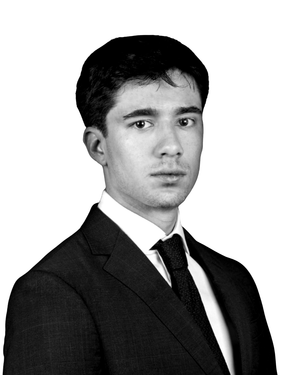
Cedric Leon, Regional Security Analyst at Riley Risk, provides security analysis, and reporting for the RileySENTINEL platform, delivering insights for complex environments.

Dr. Marko Filijovic is a Special Advisor for Riley Risk with expertise in geopolitical risk, security intelligence, artic defense and threat analysis. He holds a PhD in Security Studies from the University Of Beograd.

Sofia Zanin, Regional Security & Geopolitical Analyst Lead for Riley Risk, provides security analysis, and reporting for clients and the RileySENTINEL platform, delivering insights for complex environments.