
Report Details
Initial Publish Date
Last Updated: 22 July 2026
Report Focus Location: Europe- Eurasia
Authors: GSAT + AR, LH, LO
Contributors: GSAT + SZ
GSAT Lead: MF
RileySENTINEL provides ongoing intelligence and analytical insight for organizations operating in complex or dynamic environments.
Our global team combines regional expertise, on-the-ground networks, and structured analytical methods to support informed decision-making.
Executive Summary

Russia and Ukraine continued high-tempo long-range strike campaigns through the week of 14-20 July, with Russia exploiting persistent shortages of Ukrainian air defence interceptors through large-scale ballistic missile and drone attacks, while Ukraine expanded deep-strike drone operations against Russian logistics, military, and energy infrastructure. Ukrainian drones also struck tankers loading Russian and Kazakh crude at the Caspian Pipeline Consortium's Black Sea terminal on 19 and 20 July, part of Kyiv's broader campaign against Russian oil export infrastructure. The strikes forced a temporary suspension of loading operations at a terminal that handles roughly 80 percent of Kazakhstan's oil exports, exposing the vulnerability of critical Eurasian energy infrastructure to conflict spillover beyond the immediate battlefield.
Ukraine's military and political leadership underwent its most significant shake-up of the war after President Zelenskyy dismissed Defense Minister Mykhailo Fedorov on 16 July over unresolved friction with then-Commander-in-Chief Oleksandr Syrskyi. Days of protests followed, driven largely by younger Ukrainians who credited Fedorov with the country's drone warfare advances. Fedorov rejected an offer to return to his former post on 20 July, and Zelenskyy dismissed Syrskyi the following day, replacing him with 43-year-old Major General Mykhailo Drapatyi.
European defence integration continued to accelerate as the European Commission launched the European Defence Projects of Common Interest (EDPCIs) and the EU-Ukraine Drone Alliance, while Germany announced it would participate in a French nuclear exercise for the first time as part of a broader effort to strengthen European deterrence. NATO Allies also reaffirmed long-term military assistance to Ukraine and increased investment in defence manufacturing, signalling a continued shift toward greater European responsibility for regional security.
Despite this growing security cooperation, European political cohesion showed signs of strain. Negotiations on the European Union's 21st sanctions package against Russia remain deadlocked, reflecting persistent divisions over the economic costs of sustaining pressure on Moscow even as the conflict enters its fifth year.
Central Asia continued to emerge as a strategic arena of geopolitical competition. Kazakhstan expanded security cooperation with the European Union while simultaneously deepening nuclear and strategic cooperation with China, illustrating Astana's continued pursuit of a multi-vector foreign policy amid intensifying competition among major powers.
Political developments across Europe remained mixed. The United Kingdom entered a new political phase following Andy Burnham's appointment as Prime Minister, while continued gains by Reform UK underscored broader trends of political fragmentation and polarization. Hungary's president stepped down under a constitutional amendment forced through by the ruling Tisza party, and anti-police protests in Bologna following the death of a man in police custody left dozens of officers injured, reflecting broader strains on domestic political and social stability across the continent.
SpecialREPORT: Russian Disinformation in the Age of AI
Remaining content is for paid members only.
Please subscribe to any paid plan to unlock this article and more content.
Subscribe NowAuthors

GSAT (Geopolitical and Security Analysis Team) is Riley Sentinel's collective byline for team contributions or analysts requiring profile management due to sensitive work. All contributors are vetted by Riley Risk senior staff.
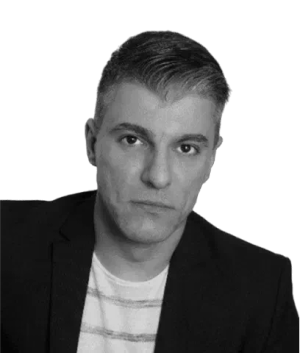
Dr. Marko Filijovic is a Special Advisor for Riley Risk with expertise in geopolitical risk, security intelligence, artic defense and threat analysis. He holds a PhD in Security Studies from the University Of Beograd.

Sofia Zanin, Regional Security & Geopolitical Analyst Lead for Riley Risk, provides security analysis, and reporting for clients and the RileySENTINEL platform, delivering insights for complex environments.

Luke Okropirashvili, Regional Security Analyst at Riley Risk, provides security analysis, and reporting for the RileySENTINEL platform, delivering insights for complex environments.

Luke Hurrel, Regional Security Analyst at Riley Risk, provides security analysis, and reporting for the RileySENTINEL platform, delivering insights for complex environments.

Abel Juan Agut Rabadán, Regional Security Analyst at Riley Risk, provides security analysis, and reporting for the RileySENTINEL platform, delivering insights for complex environments.