SpecialREPORT: The Iron Fist Turn: Political Extremism in the Americas
Authoritarian Drift, Contested Elections, and the Iron Fist Turn Across the Americas
Report Details
Initial Publish Date
Last Updated: 14 JULY 2026
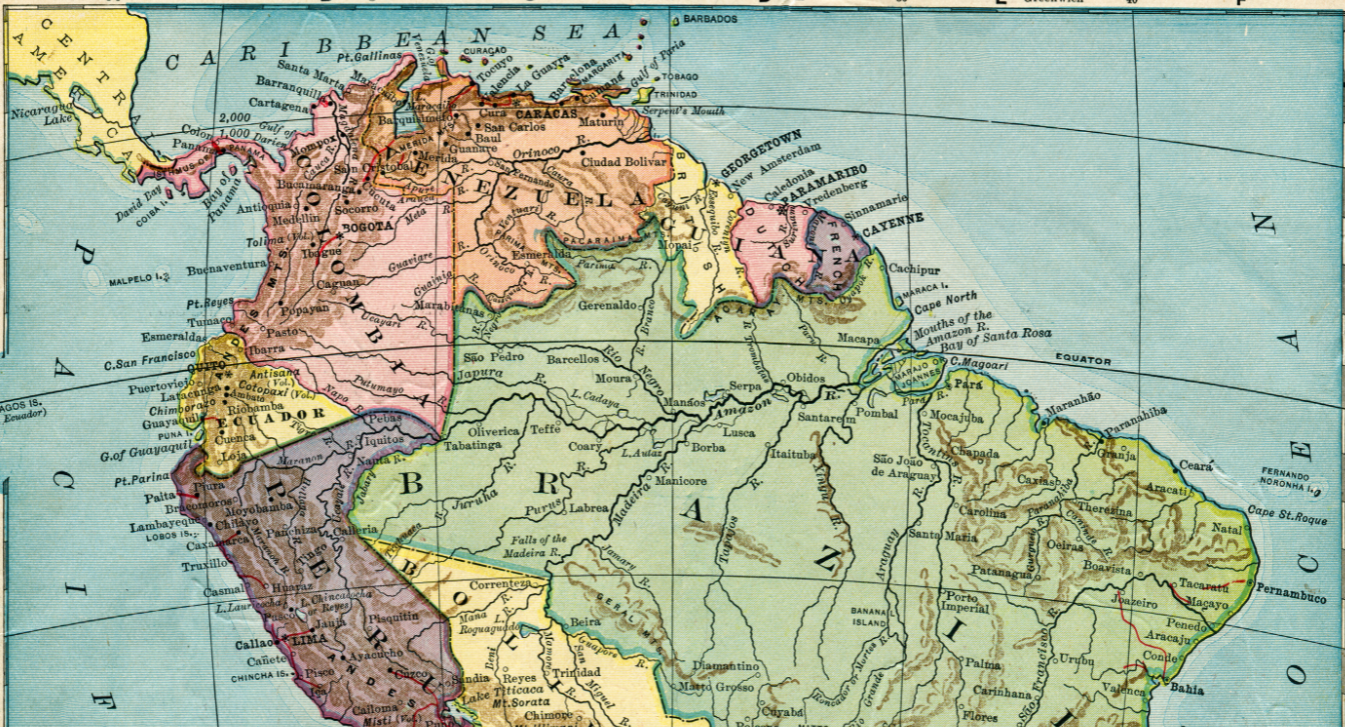
Report Focus Location: Americas - Brazil, Colombia, Honduras, Peru
Authors: CL, KM, MSI
GSAT Lead: MF + SZ
RileySENTINEL provides timely intelligence and in-depth analysis for complex environments. Our global team blends international reach with local expertise, offering unique insights to navigate challenging operations. For custom insights or urgent consultations, contact us here.
Executive Summary
The political landscape across Peru, Honduras, Colombia, and Brazil points to a regional drift that reads less like a traditional ideological swing and more like a collective response to exhaustion with the political establishment. Decades of economic exclusion, security crisis, and systemic corruption have worn down traditional party systems in each country, opening space for a new regional norm: explicitly authoritarian, "iron fist" security platforms. Whether measured by the political defense of mass-casualty urban operations like Brazil's Operation Containment or Colombia's pivot toward Bukele-style mega-prisons under incoming President Abelardo de la Espriella, populations across the region are increasingly willing to trade due process for heavy-handed state force in exchange for stability and economic security.
The operational picture is not one of total institutional collapse but of a high-friction environment. The razor-thin margins produced by recent elections, Keiko Fujimori's contested win in Peru and de la Espriella's tight victory in Colombia, guarantee prolonged legislative conflict and localized unrest rather than a clean transfer of power, and the resulting hyper-polarization risks paralyzing the same security and economic action voters are demanding. Honduras remains structurally divided by mistrust tracing back to its 2009 constitutional crisis, with security forces increasingly used as political tools amid a homicide rate of 23.2 per 100,000. Washington's terrorist designation of Brazil's largest criminal organizations adds a further layer of legal and compliance exposure for companies operating in contested urban spaces there.
Despite the strain, democratic institutions across the four countries are proving resilient rather than collapsing. This report assesses whether the region's current volatility is a passing phase or a durable, high-friction baseline that organizations need to plan around going forward.
This is the condensed intelligence brief. The full SpecialREPORT includes detailed country-by-country breakdowns of economic drivers, institutional weaknesses, and populist figures in Peru and Honduras, Colombia's election dynamics and armed group strengthening data, Brazil's presidential field and cartel designations and a complete stability factors matrix.
[Download the full report at the end of this report]
Remaining content is for paid members only.
Please subscribe to any paid plan to unlock this article and more content.
Subscribe NowAuthors

Dr. Marko Filijovic is a Special Advisor for Riley Risk with expertise in geopolitical risk, security intelligence, artic defense and threat analysis. He holds a PhD in Security Studies from the University Of Beograd.

Cedric Leon, Regional Security Analyst at Riley Risk, provides security analysis, and reporting for the RileySENTINEL platform, delivering insights for complex environments.

Mariana Seidner, Regional Security Analyst at Riley Risk, provides security analysis, and reporting for the RileySENTINEL platform, delivering insights for complex environments.

Kirra Moore, Regional Security Analyst at Riley Risk, provides security analysis, and reporting for the RileySENTINEL platform, delivering insights for complex environments.

Sofia Zanin, Regional Security & Geopolitical Analyst Lead for Riley Risk, provides security analysis, and reporting for clients and the RileySENTINEL platform, delivering insights for complex environments.