
Report Details
Initial Publish Date
Last Updated: 28 October 2026
Report Focus Location: Americas
Authors: GSAT (KM, MS, CL)
GSAT Lead: SZ
RileySENTINEL provides ongoing intelligence and analytical insight for organizations operating in complex or dynamic environments.
Our global team combines regional expertise, on-the-ground networks, and structured analytical methods to support informed decision-making.
|

Executive Summary
Security threats intensified across Latin America and the Caribbean over the past month. In Colombia, suspected FARC dissidents and ELN militants carried out attacks in Cauca, and on October 27 a bomb near Cúcuta's main border crossing with Venezuela injured at least four police officers. Ecuador faced renewed unrest as unions and students protested against President Daniel Noboa's government, alongside rising gang violence in Esmeraldas and Manabí. In Guatemala, the fatal shooting of prominent anti-corruption lawyer and former prosecutor Juan Francisco Solórzano Foppa underscored persistent risks of political violence. In Haiti, armed gangs ambushed UN-authorized security personnel near Port-au-Prince, leaving four Salvadoran members missing and prompting El Salvador to launch a military rescue operation; on October 24, President Nayib Bukele rejected reports that their remains had been found.
Across Latin America, governments face mounting political, economic, and social pressures. In Brazil, Luiz Inácio Lula da Silva won the October 25 runoff, and challenger Flávio Bolsonaro was reported to have left for the United States after the Supreme Court ordered him to surrender his passports. In Venezuela, the opposition held its first nationwide protest in nearly two years, and María Corina Machado returned from exile on October 25. In Ecuador, former presidential candidate Luisa González was arrested and placed in preventive detention in a campaign-finance case. In Peru, President Keiko Fujimori secured expanded decree-making powers for 90 days, while Bolivia advanced a $1.9 billion IMF loan and cut diesel subsidies. The OAS called on Nicaragua to restore civil liberties and address political disappearances. In Mexico, a worsening water crisis has fueled weeks of protests, clashes with police, and attacks on government buildings, and freight carriers began a national strike on October 26. Colombia saw nationwide demonstrations against President Abelardo de la Espriella's administration following changes to security-force protocols for protests. Meanwhile, Canada-U.S. tensions remain elevated as Ottawa announced $8.7 billion in support for industries affected by U.S. tariffs, while Washington accused Canadian politicians of interfering in American elections
Charter Members receive the full RegionalPULSE report — including security assessments, geopolitical analysis, socioeconomic conditions, stability factors, and forward-looking outlook — delivered to your inbox every cycle. Free subscribers see the executive summary only.
Secure your lifetime Charter Member Account Today
Remaining content is for paid members only.
Please subscribe to any paid plan to unlock this article and more content.
Subscribe NowAuthors

GSAT (Geopolitical and Security Analysis Team) is Riley Sentinel's collective byline for team contributions or analysts requiring profile management due to sensitive work. All contributors are vetted by Riley Risk senior staff.

Kirra Moore, Regional Security Analyst at Riley Risk, provides security analysis, and reporting for the RileySENTINEL platform, delivering insights for complex environments.
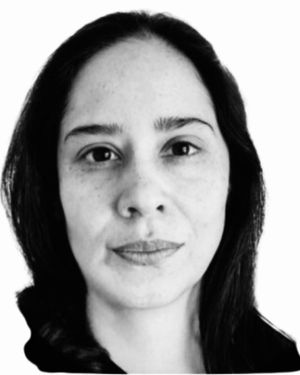
Mariana Seidner, Regional Security Analyst at Riley Risk, provides security analysis, and reporting for the RileySENTINEL platform, delivering insights for complex environments.
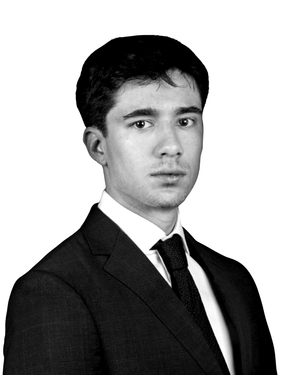
Cedric Leon, Regional Security Analyst at Riley Risk, provides security analysis, and reporting for the RileySENTINEL platform, delivering insights for complex environments.

Sofia Zanin, Regional Security & Geopolitical Analyst Lead for Riley Risk, provides security analysis, and reporting for clients and the RileySENTINEL platform, delivering insights for complex environments.